






Participants
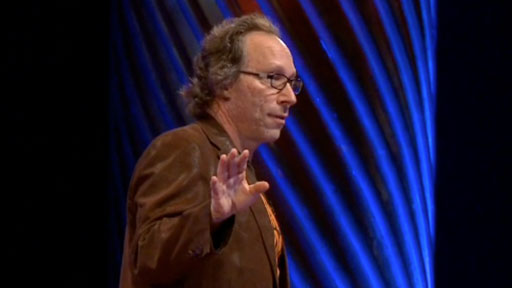
Lawrence Krauss is an internationally known theoretical physicist and best-selling author. His research focuses on the intersection of cosmology and elementary particle physics. Krauss’s work addresses questions about the origin of matter in the universe.
Read More
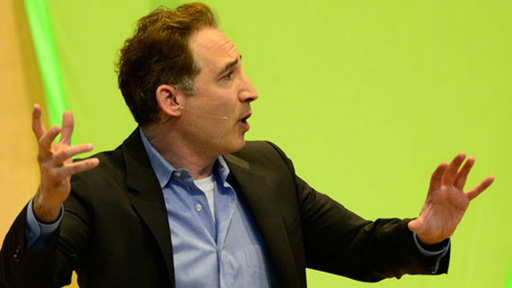
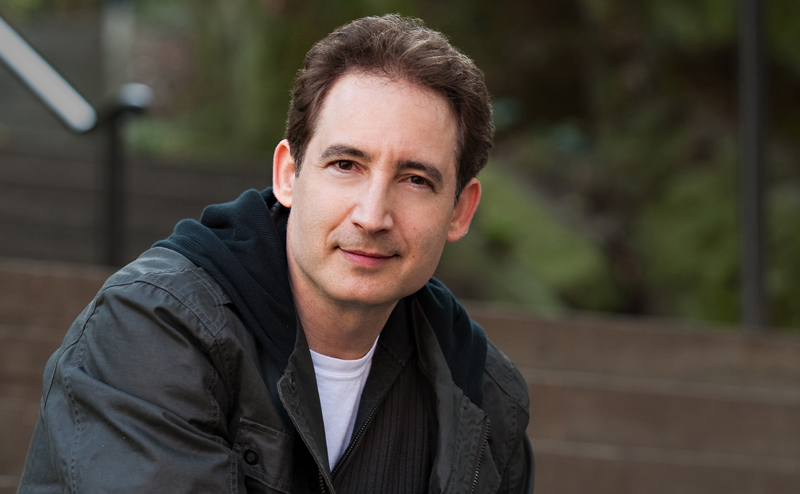
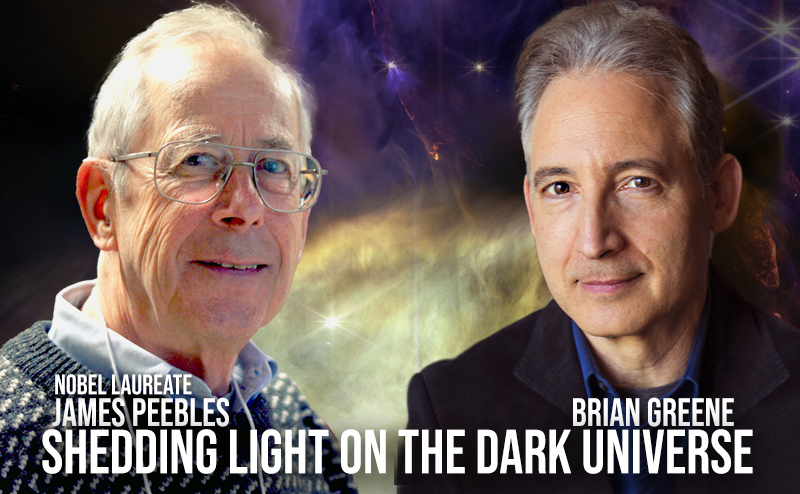
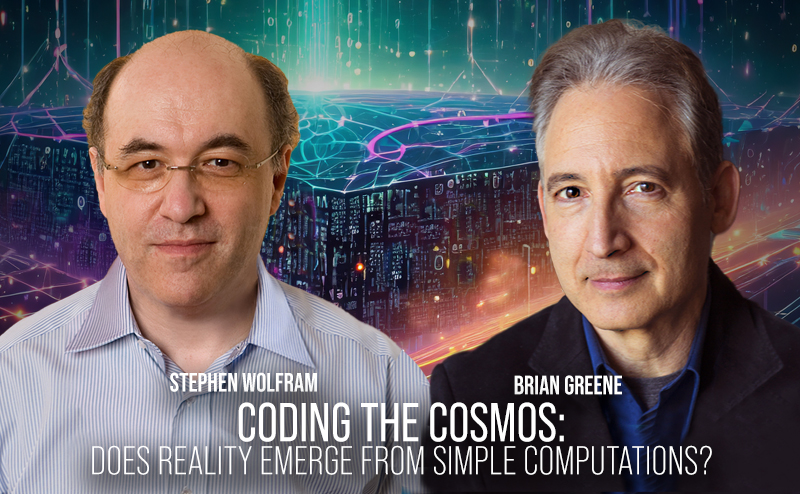
Brian Greene is a professor of physics and mathematics at Columbia University, and is recognized for a number of groundbreaking discoveries in his field of superstring theory. His books, The Elegant Universe, The Fabric of the Cosmos, and The Hidden Reality, have collectively spent 65 weeks on The New York Times bestseller list.
Read More
Michael Russell’s research into the emergence of life and early evolution will help determine whether earth alone supports life in our universe. Russell was awarded the William Smith Medal from the Geological Society of London.
Read More
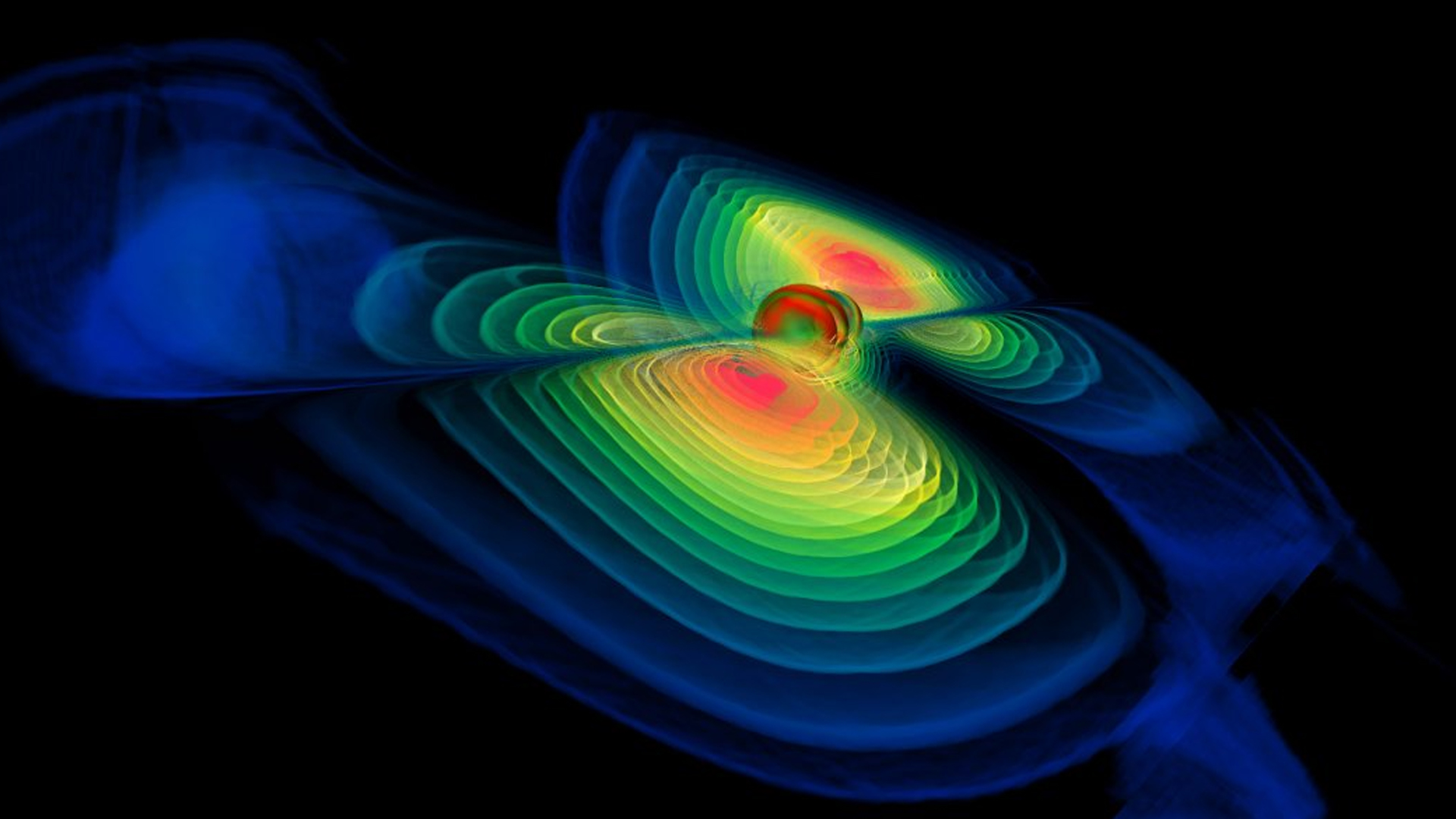
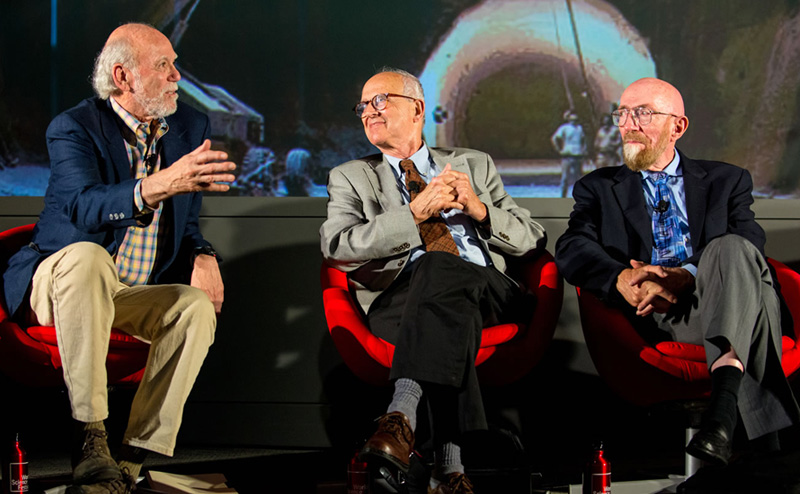
Kip Thorne is the Feynman Professor of Theoretical Physics, Emeritus, at Caltech. He was the co-founder (with Rai Weiss and Ron Drever) of the LIGO (Laser Interferometer Gravitational Wave Observatory) Project and he chaired the steering committee that led LIGO in its earliest years.
Read More
Thupten Jinpa has been the principal English translator to the Dalai Lama for more than 25 years and has translated and edited many of his books, including Ethics for the New Millennium; Transforming the Mind; The Universe in a Single Atom: Convergence of Science and Spirituality.
Read More
Andrea Lommen has been a pioneer in detecting gravitational waves with pulsars. Dr. Lommen’s research, and that of the team she leads, has taken theoretical concepts and transformed them into experimental practice.
Read More
Nobel Laureate
Nobel Laureate John Mather’s research in cosmology as part of the Cosmic Background Explorer (COBE) team has been recognized as some of the most important work of the 20th century.
Read More
Mark Whittle uses large optical and radio telescopes, including the Hubble Space Telescope, to study processes occurring within 1,000 light years of the central supermassive black hole in Active Galaxies.
Read More
Marcela Carena is an internationally renowned expert on revolutionary ideas in particle physics, ideas about to be tested at the Large Hadron Collider. She has worked closely with experimental physicists at the Fermilab and CERN laboratories developing strategies for discovery at the world’s highest-energy particle colliders.
Read More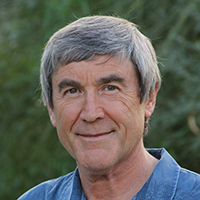
Paul Davies is a theoretical physicist, cosmologist, astrobiologist, and best-selling author. He is Regents’ Professor at Arizona State University, where he is Director of Beyond: Center for Fundamental Concepts in Science.
Read More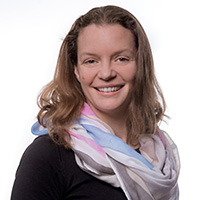
Monica Dunford is an experimental high-energy particle physicist who helped bring the ATLAS detector at CERN into operation for the first Large Hadron Collider beam and collisions.
Read More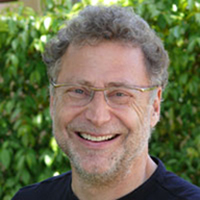
Leonard Mlodinow is a theoretical physicist. He received his Ph.D. from the University of California at Berkeley and taught at the California Institute of Technology. He is a popular international speaker and the author of numerous academic papers in physics and eight popular science books, including four best sellers.
Read More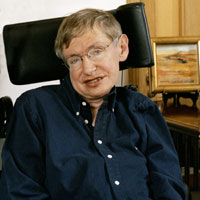
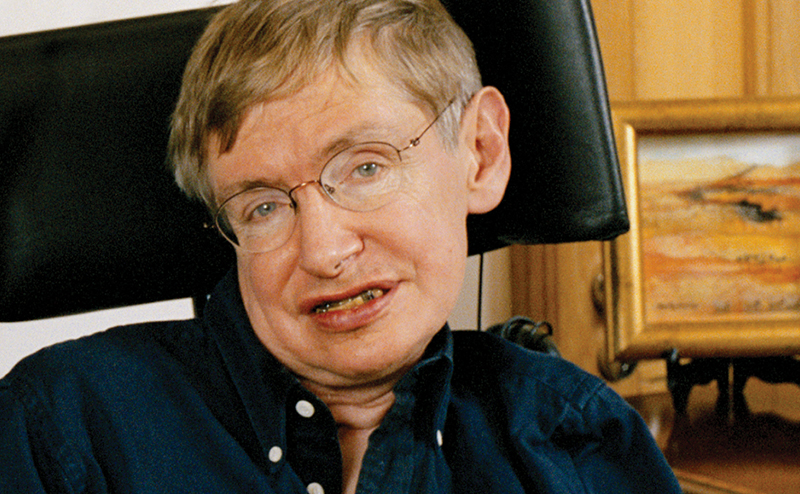
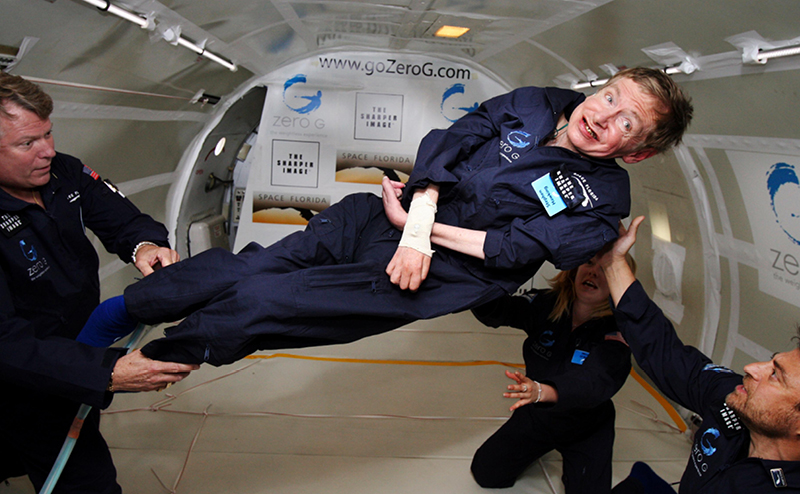
Stephen W. Hawking is one of the world’s foremost theoretical physicists. His dramatic breakthroughs into the origin of the universe and the properties of black holes are among the most revolutionary insights into the nature of the cosmos since the work of Albert Einstein.
Read More
Janna Levin is a professor of physics and astronomy at Barnard College of Columbia University and the author of Black Hole Blues and Other Songs from Outer Space.
Read More
Professor Frank Wilczek is considered one of the world’s eminent theoretical physicists. He received the 2004 Nobel Prize in Physics for the discovery of asymptotic freedom in the theory of the strong interaction—key to several major problems in particle physics and beyond.
Read More
Neil deGrasse Tyson is the Frederick P. Rose Director of the Hayden Planetarium at the American Museum of Natural History in New York City. He is the author of several books and hosts the NOVA ScienceNow program on PBS. Tyson is best known as an ardent popularizer of astronomy and astrophysics.
Read More
Claire Evans is a freelance science writer, science fiction critic, polymath, and musician. Her work explores the synchronies between culture, technology, and science. She has been writing the art/science blog Universe for over five years and still doesn’t know how to describe it.
Read More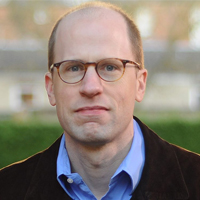
Nick Bostrom is a co-founder of the World Transhumanist Association and Director of the Future of Humanity Institute at Oxford University. His research areas of interest include artificial intelligence, bio-enhancement, and mind uploading.
Read More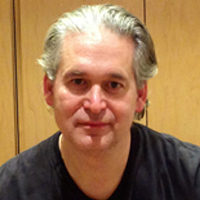
David Albert is the Frederick E. Woodbridge Professor of Philosophy at Columbia University in New York where he directs the MA Program in the philosophical Foundations of Physics. He received …
Read More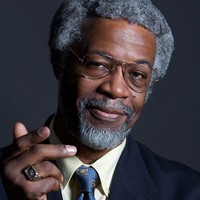
Sylvester James (Jim) Gates, Jr. is currently the John S. Toll Professor of Physics at the University of Maryland-College Park. In spring of 2009 he was appointed to serve on President Obama’s Council of Advisors on Science and Technology and the Maryland State Board of Education.
Read More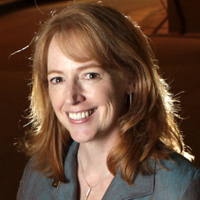
Evalyn Gates is the Assistant Director of the Kavli Institute for Cosmological Physics at the University of Chicago and a Senior Research Associate in the Department of Astronomy and Astrophysics. Her research focuses on theoretical cosmology and particle astrophysics.
Read More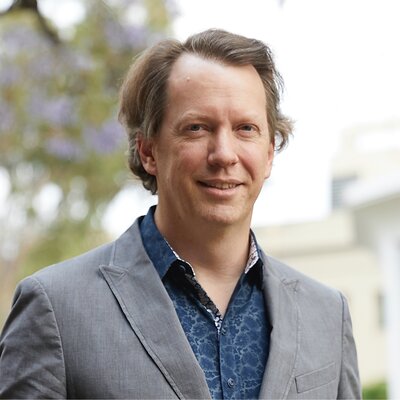
Bestselling Author
Sean Carroll is the Homewood Professor of Natural Philosophy at the Johns Hopkins University, and an External Professor at the Santa Fe Institute. Prior to that he was a research …
Read More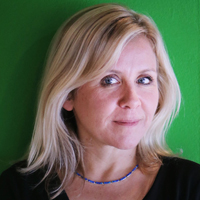
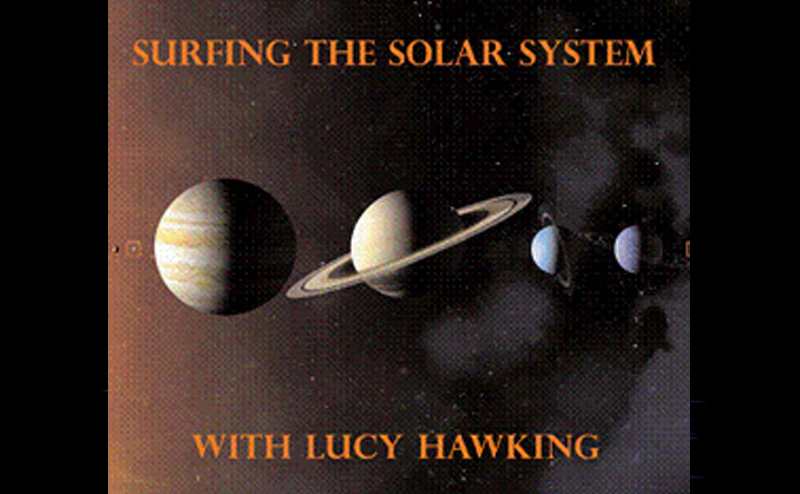
Lucy Hawking is a journalist, and the author of several novels. With her father, the physicist Stephen Hawking, she has written George’s Secret Key to the Universe, a children’s adventure featuring the mysteries of physics, science and the Universe.
Read More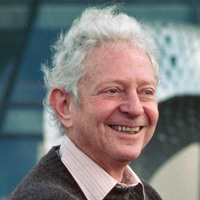
Leon Lederman is the Director Emeritus of Fermi National Accelerator Laboratory in Batavia, Illinois, and Pritzker Professor of Science at Illinois Institute of Technology in Chicago; for his contributions to neutrino physics, he shared the 1988 Nobel Prize in Physics.
Read More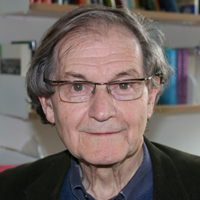
Sir Roger Penrose has made seminal contributions to our understanding of space and time. In describing the initial conditions of the universe, he provided the foundation for studying the origins of the arrow of time.
Read More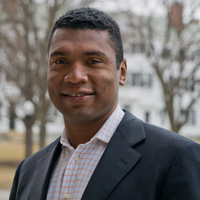
Theoretical physicist Stephon Alexander explores unresolved questions about the early universe. Also an accomplished jazz musician, Alexander has collaborated with Grammy Award-winning musician Will Calhoun.
Read More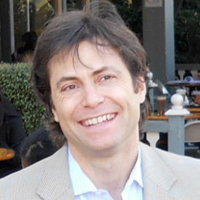
President of the Future of Life Institute, Max Tegmark advocates for positive use of technology. He is also a professor doing physics and AI research at MIT.
Read More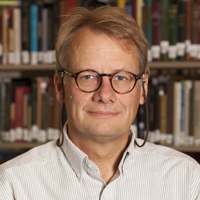
Physicist Lyman Page measures the cosmic microwave background radiation left over from the Big Bang to better understand the very early universe and how it has since evolved. He is the Henry DeWolf Smyth Professor of Physics at Princeton University.
Read More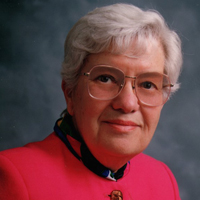
Vera C. Rubin was an observational astronomer who studied the motions of gas and stars in galaxies and motions of galaxies in the universe for 75 percent of her life. …
Read More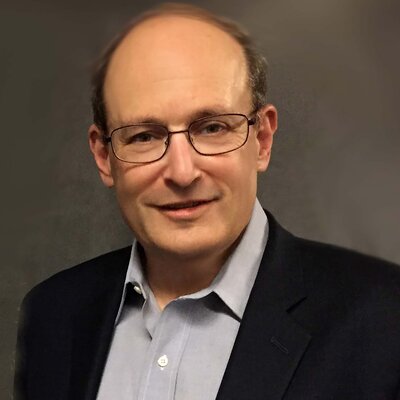
Dirac Medalist
Paul J. Steinhardt is the Albert Einstein Professor in Science and Director of the Princeton Center for Theoretical Science at Princeton University, where he is also on the faculty of …
Read More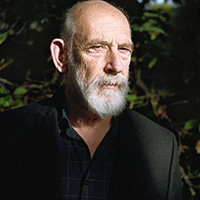
Leonard Susskind is the Felix Bloch Professor of Theoretical Physics at Stanford University, and one of the discoverers of string theory, a candidate for a theory that unifies all laws of physics. An award-winning author, he is a proponent of the idea that our universe is one of an infinite number.
Read More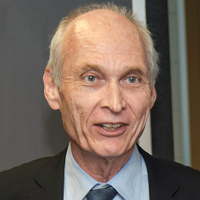
Theoretical astrophysicist Michael S. Turner is a recognized figure in pioneering the interdisciplinary field of particle astrophysics and cosmology, for which he shared the 2010 Dannie Heineman Prize. In collaboration with Edward Kolb, he initiated the Fermilab astrophysics program.
Read More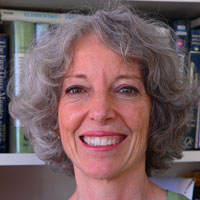
Glennys Farrar is a collegiate professor of physics at New York University. She has made seminal contributions to theoretical particle physics, including demonstrating that quarks are not just mathematical constructs but are actually physically present in matter and pioneering the search for supersymmetry.
Read More
Katherine Freese is the Director of the Weinberg Institute for Theoretical Physics and the Jeff & Gail Kodosky Professor of Physics at the University of Texas at Austin. She is …
Read More
Saul Perlmutter is a professor in Berkeley’s Department of Physics and a senior scientist at the Lawrence Berkeley National Laboratory. He is the leader of the Supernova Cosmology Project, an international collaboration of research teams from seven countries measuring the expansion history of the universe.
Read More
Seth Lloyd was the first person to develop a realizable model for quantum computation and is working with a variety of groups to construct and operate quantum computers and quantum …
Read More
David Bodanis is known to a wide audience as an author of popular science books such as the highly acclaimed E=mc²: A Biography of the World’s Most Famous Equation and Electric Universe, which won the 2006 Royal Society Aventis Prize for Science Books.
Read More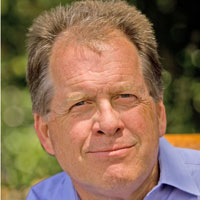
Timothy Ferris is the author of a dozen books (most recently The Science of Liberty), plus 200 articles and essays, and three documentary films—The Creation of the Universe, Life Beyond Earth, and Seeing in the Dark—seen by over 20 million viewers
Read More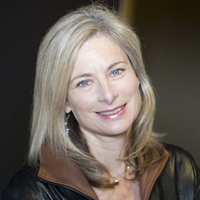
Lisa Randall studies theoretical particle physics and cosmology at Harvard University, where she is Frank B. Baird, Jr., Professor of Science. Randall is a member of the National Academy of Sciences, the American Philosophical Society, and the American Academy of Arts and Sciences.
Read More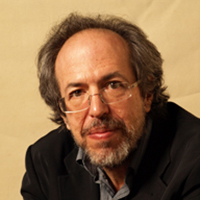
Lee Smolin is a theoretical physicist who has made important contributions to the search for quantum gravity. Smolin is a founding faculty member at Perimeter Institute for Theoretical Physics. His five books explore philosophical issues raised by contemporary physics and cosmology.
Read More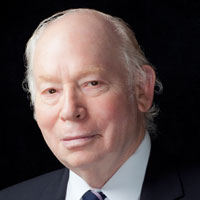
Steven Weinberg was a professor of physics and astronomy at the University of Texas at Austin. His honors included the Nobel Prize in Physics and National Medal of Science, election to numerous academies, and 16 honorary doctoral degrees.
Read More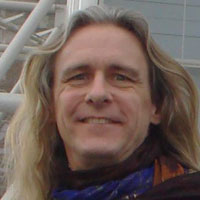
As the director of astrovisualization at the American Museum of Natural History, Carter Emmart directs the museum’s groundbreaking space shows and heads up development of an interactive 3D atlas called The Digital Universe.
Read More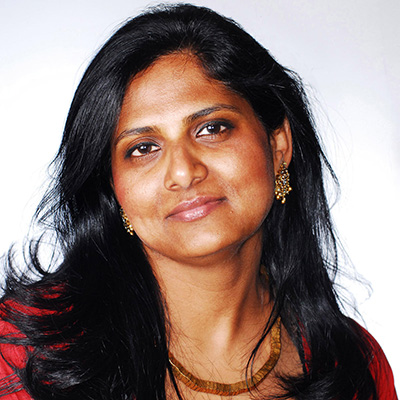
Priyamvada Natarajan is the Joseph S. and Sophia S. Fruton Professor of Astronomy and Physics at Yale. She is an astrophysicist with research interests in cosmology, gravitational lensing, and black …
Read More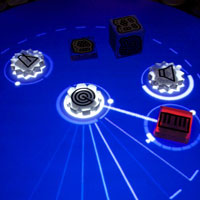
This is a collaborative, multi-user audio-visual experience. Sensors in a table and objects combine to create a sonic experience that is different every time a piece is moved.
Read More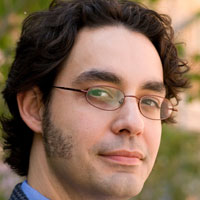
MIT physicist Enectali Figueroa-Feliciano works at the intersection of cosmology, particle physics, astronomy, and engineering.
Read More
Charles Liu is a professor of astrophysics at the City University of New York’s College of Staten Island and an associate with the Hayden Planetarium and Department of Astrophysics at the American Museum of Natural History in New York. His research focuses on colliding galaxies, quasars, and the star formation history of the Universe.
Read More
In 1998, Julie Taymor became the first woman to win the Tony® Award for Best Direction of a Musical, and also won a Tony® for Best Costumes, for her landmark production of The Lion King. The musical has won three Molière Awards including Best Musical and Best Costumes, garnered Drama Desk, Outer Critics Circle and Drama League awards for Taymor’s direction.
Read More
Matt Schickele is a composer, songwriter, and co-host of the podcast Scopes Monkey Choir: Music in a Rational Universe.
Read More
Before joining the Department of Journalism, Charles Seife was a writer for Science magazine and had been a U.S. correspondent for New Scientist. He holds an A.B. in mathematics from Princeton University, an M.S. in mathematics from Yale University, and an M.S. in journalism from Columbia University.
Read More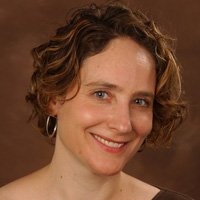
Amber Miller aims to understand the origin and evolution of the universe by studying the cosmic microwave background, the faint glow of light left over from the Big Bang.
Read More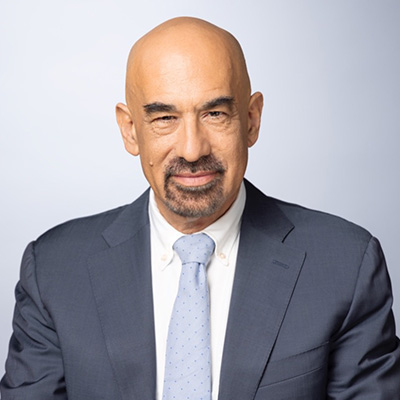
David Spergel studies the big questions in cosmology and astrophysics: How large is the universe, and what is its shape? Is it finite? What are the dark matter and dark …
Read More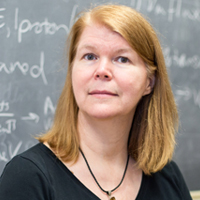
Janet Conrad’s work focuses on the lightest known particle of matter, the neutrino. The number of neutrinos in the universe far exceeds the number of atoms, yet we know surprisingly little about them. Conrad is now exploring whether neutrinos have other unexpected properties and is working to develop an updated model for particle physics that incorporates these new surprises.
Read More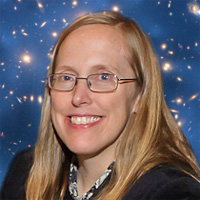
Suzanne Staggs is an experimental physicist who uses cutting-edge detectors and optical technology to measure the cosmic microwave background, the low-level radiation left over from the very first moments of the universe. A physics professor at Princeton University, Staggs is now in charge of the detectors for the Atacama Cosmology Telescope project.
Read More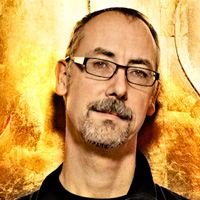
Tim McHenry, the program producer at New York City’s Rubin Museum of Art, presents theater-going audiences with what the Huffington Post has called “some of the most original and inspired programs on the arts and consciousness in New York City.”
Read More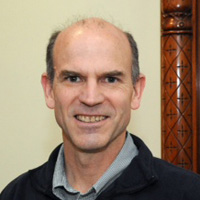
John Carlstrom studies the origin and evolution of the universe from the very bottom of the Earth. Carlstrom is the Subramanyan Chandrasekhar Professor of Astronomy, Astrophysics, and Physics at the University of Chicago, and deputy director of the Kavli Institute for Cosmological Physics.
Read More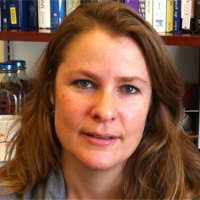
Britt Reichborn-Kjennerud is an experimental astrophysicist who uses measurements of the cosmic microwave background, the afterglow of the big bang, to understand the origin, composition, and evolution of the universe.
Read More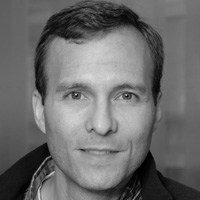
John Kovac is an associate professor in the Astronomy and Physics Departments at Harvard University. His cosmology research focuses on observations of the cosmic microwave background to reveal signatures of the physics that drove the birth of the universe.
Read More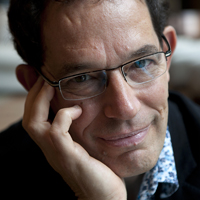
Neil Turok is Director and Niels Bohr Chair at the Perimeter Institute for Theoretical Physics in Ontario, Canada. Previously he was Professor of Physics at Princeton and Chair of Mathematical Physics at Cambridge. He is also Founder and Chair of the African Institute for Mathematical Sciences.
Read More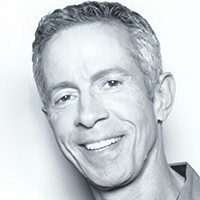
Peter Staley has been a long-term AIDS and gay rights activist, first as a member of ACT UP New York, then as the founding director of TAG, the Treatment Action Group. He served on the board of the American Foundation for AIDS Research (amfAR) for 13 years.
Read More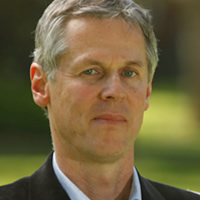
Andreas Albrecht is a leading theoretical cosmologist. He received his Ph.D. from the University of Pennsylvania in 1983 where, with Paul Steinhardt, he wrote one of the original papers on “new” or “slow roll” inflation.
Read More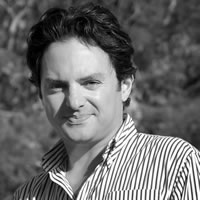
Gianfranco Bertone is an Associate Professor at the University of Amsterdam, where he investigates topics at the interface between Particle Physics and Cosmology.
Read More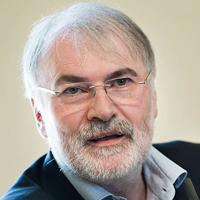
Marco Bersanelli is Professor of Astronomy and Astrophysics and Director of the Ph.D. School in Physics, Astrophysics and Applied Physics at the University of Milan, Italy.
Read More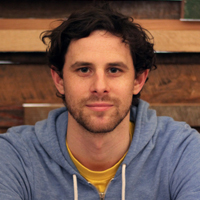
Dominic Walliman is a physicist and an award-winning science writer. He is co-creator of the Professor Astro Cat science books with illustrator Ben Newman. He also makes YouTube videos communicating science.
Read More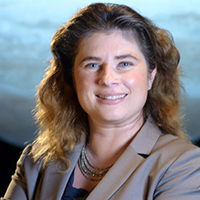
Michelle Thaller is a nationally recognized spokesperson for astronomy and science and the Assistant Director of Science at NASA’s Goddard Spaceflight Center. She has a Bachelor’s in astrophysics from Harvard and a Ph.D. from Georgia State University.
Read More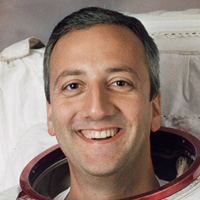
Mike Massimino is an engineer, NASA astronaut, and veteran of two spaceflights. He logged more than 571 hours in space, where he conducted four spacewalks and serviced the Hubble Space Telescope.
Read More
Maria Spiropulu is the Shang-Yi Ch’en Professor of Physics at the California Institute of Technology. Born and educated in Macedonia/Greece, she moved to the U.S. to pursue her Ph.D. at …
Read More
Caleb Scharf’s research career spans cosmology, exoplanetary science, and astrobiology. He currently leads efforts at Columbia University in New York to understand the nature of exoplanets and living environments in the universe.
Read More
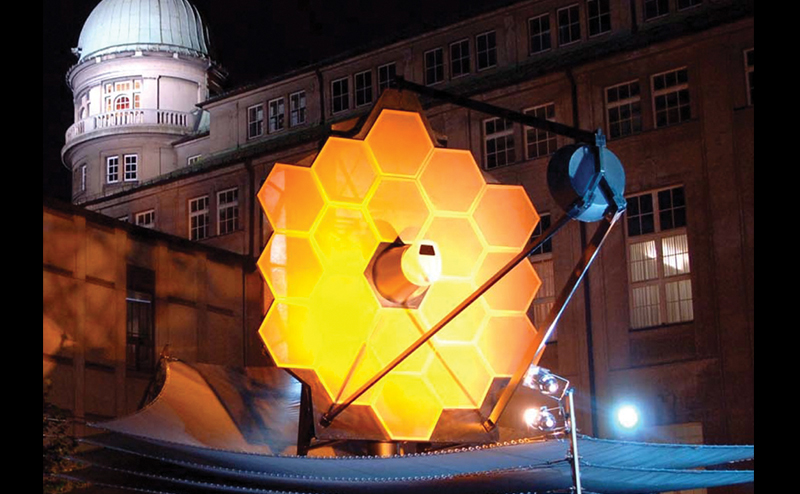
Amber Straughn is an astrophysicist at NASA and a member of the James Webb Space Telescope Project Science Team. Straughn grew up in the small farming town of Bee Branch, Arkansas where her fascination with astronomy began under beautifully dark, rural skies.
Read More
Nobel Laureate
Adam Riess is the Thomas J. Barber Professor in Space Studies at the Johns Hopkins University Krieger School of Arts and Sciences, a distinguished astronomer at the Space Telescope Science …
Read More
Josh Frieman is a senior staff scientist at the Fermi National Accelerator Laboratory and Professor of Astronomy & Astrophysics. He’s also a member of the Kavli Institute for Cosmological Physics at the University of Chicago.
Read More
After receiving a Ph.D. in biochemistry and molecular biology from Harvard, Paul Bingham spent two years at the National Institutes of Health in Research Triangle Park. He later joined the faculty of the Department of Biochemistry and Cell Biology at Stony Brook University.
Read More
Justin Khoury is associate professor and undergraduate chair of physics & astronomy at the University of Pennsylvania. He obtained his B.Sc. from McGill University and his Ph.D from Princeton University under Paul Steinhardt.
Read More
Pedro G. Ferreira is Professor of Astrophysics at the University of Oxford. Originally from Portugal, he has studied and worked in London, Berkeley and at CERN in Geneva. His area of expertise is cosmology, focusing on the physics of the early universe and with a special interest in Einstein’s general theory of relativity.
Read More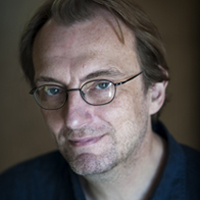
A Guggenheim Fellow in Science Writing, Richard Panek received the American Institute of Physics Science Communication Award in 2012. He teaches in the Writing Seminars at Johns Hopkins University and in the MFA Writing program at Goddard College.
Read More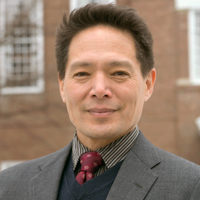
Peter Ulric Tse is interested in understanding, first, how matter can become conscious, and second, how conscious and unconscious mental events can be causal in a universe where so many believe a solely physical account of causation should be sufficient.
Read More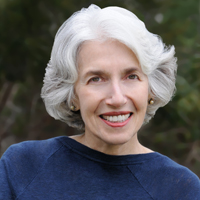
Dava Sobel has been writing about science for forty years, including a series of articles for The New York Times describing her month-long stint as a human subject in a laboratory study of circadian rhythm. Sobel is the author of several bestselling books about the history of astronomy.
Read More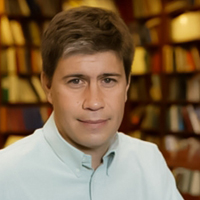
Matias Zaldarriaga is a professor at the Institute for Advanced Study in Princeton. He has a PhD from MIT and is the recipient of a MacArthur Fellowship, the Gribov Medal from the European Physical Society, and the Helen B. Warner Prize from the American Astronomical Society.
Read More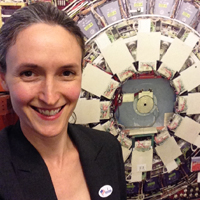
Sarah Demers is the Horace D. Taft Associate Professor of Physics at Yale University. She is a particle physicist who works to understand the most fundamental constituents of the universes and the forces between them.
Read More
Hitoshi Murayama is a theoretical physicist who works on the connection between the physics of the small (elementary particles) and the large (the Universe). He is also a founding director of the Kavli Institute for the Physics and Mathematics of the Universe at the University of Tokyo and he’s a member of American Academy for Arts and Sciences, as well as Science Council of Japan.
Read More
David Kipping is a Professor of Astronomy at Columbia University where he leads the Cool Worlds Lab – a research team primarily focussed on discovering new planets and moons. Kipping’s …
Read More
Lindley Winslow’s work focuses on answering big questions about the universe by developing novel particle detectors. She received her BA in physics and astronomy in 2001 and her PhD in physics in 2008, both from the University of California at Berkeley.
Read More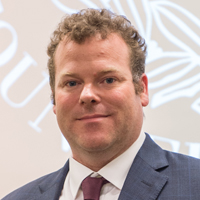
Duncan Brown is the Charles Brightman Professor of Physics at Syracuse University. Brown has worked in gravitational-wave astronomy for 20 years and played a lead role in LIGO’s discovery of binary black hole and binary neutron star collisions. Brown’s research involves using gravitational-wave observations to understand the nature of the universe.
Read More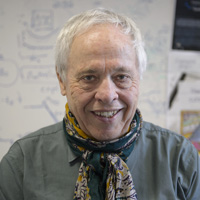
Joseph Silk is Homewood Professor of Physics and Astronomy at Johns Hopkins University in Baltimore, a researcher at Institut d’Astrophysique de Paris, and a Senior Fellow at the Beecroft Institute for Particle Astrophysics and Cosmology at the University of Oxford.
Read More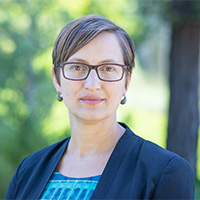
Risa Wechsler is the Director of the Kavli Institute for Particle Astrophysics and Cosmology and an associate professor of Physics at Stanford and the SLAC National Accelerator Laboratory. Her work combines numerical simulations and modeling with data from the largest existing and future galaxy surveys to model and map out the evolution and contents of the Universe from its earliest moments to the present day.
Read More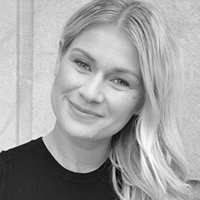
Dr. Sarah Pearson is a Danish astrophysicist who received her PhD from Columbia University in New York City, where she specialized in colliding galaxies and dark matter.
Read More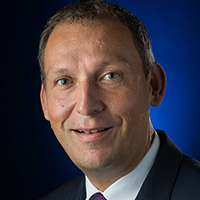
From October 2016 until the end of 2022, Thomas Zurbuchen was the Associate Administrator for the Science Mission Directorate at NASA. The directorate’s stated mission is to find answers to …
Read More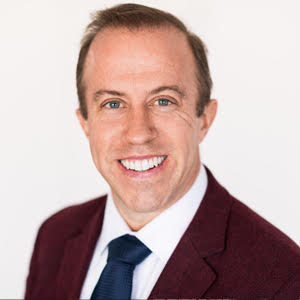
Jason Rhodes is NASA’s Science Lead on the EUCLID project. EUCLID is a European Space Agency project with which NASA collaborates, and its mission is to study the nature of …
Read More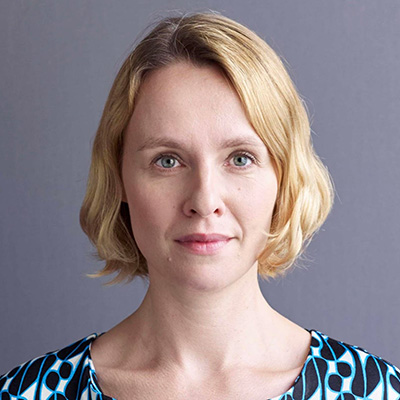
Breakthrough Prize
Jo Dunkley is a professor of Physics and Astrophysical Sciences at Princeton University. Her research is in cosmology, studying the origins and evolution of the Universe. Her major projects are …
Read More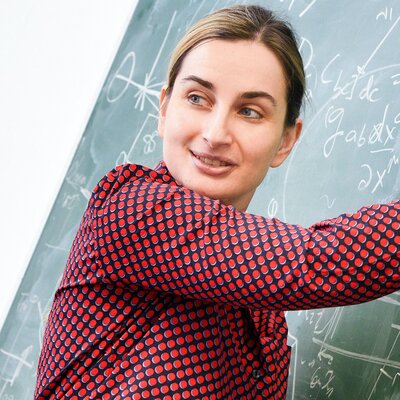
Lise Meitner Award
Anna Ijjas is a theoretical and computational physicist, working in gravitation and cosmology, whose research is aimed at the most fundamental questions about the universe: what is the mechanism that …
Read More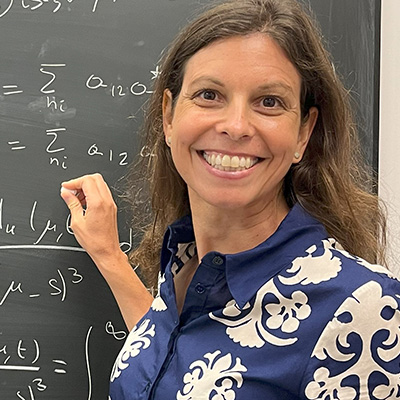
Blavatnik Award
Claudia de Rham is professor of theoretical physics at Imperial College London and a member of the American Academy of Arts and Sciences. She researches gravity, particle physics, and cosmology, …
Read More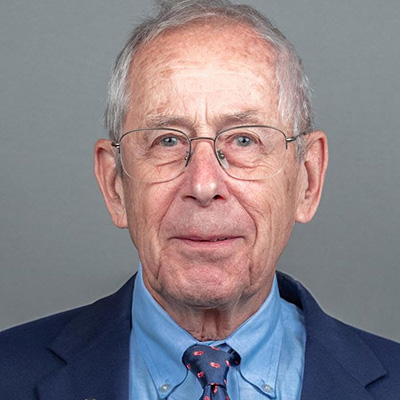
James Peebles is the Albert Einstein Professor of Science (Emeritus) at Princeton University and is regarded as one of the greatest theoretical cosmologists of the last 50 years. His work …
Read More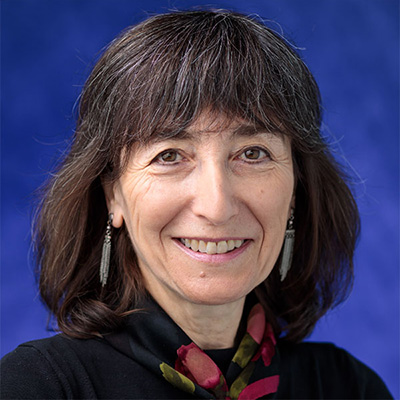
Wendy Freedman is the John and Marion Sullivan University Professor in Astronomy and Astrophysics at the University of Chicago. Her research is in observational cosmology (measures of the expansion rate …
Read More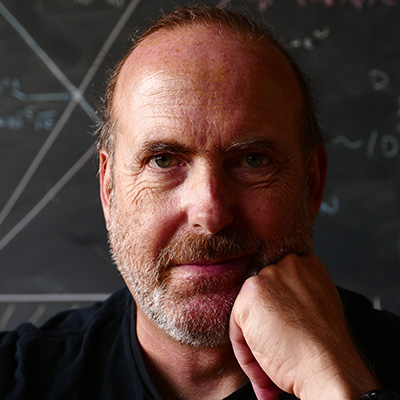
Will Kinney is a professor in the Department of Physics at the University at Buffalo, SUNY, where he has been on faculty since 2003. Dr. Kinney received his Bachelor of …
Read More
Brian Schmidt shares the 2011 Nobel Prize in Physics with Adam Riess and Saul Perlmutter for their discovery of the accelerating expansion of the universe through observations of distant supernovae. …
Read More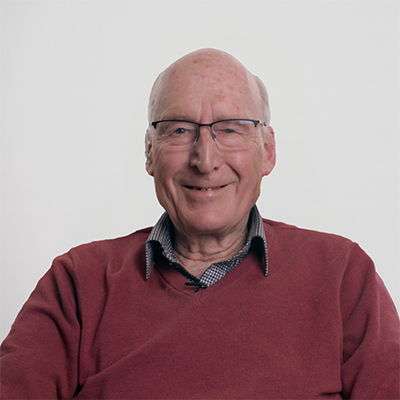
Julian Barbour is a British theoretical physicist renowned for his work on the nature of time and quantum gravity. Largely independent from academic institutions, he has pursued research outside traditional …
Read More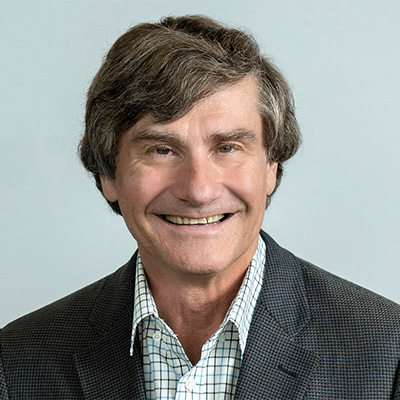
Alex Filippenko is a Richard & Rhoda Goldman Distinguished Professor in the Physical Sciences at University of California, Berkeley. There, he has made significant contributions to the study of supernovae, …
Read More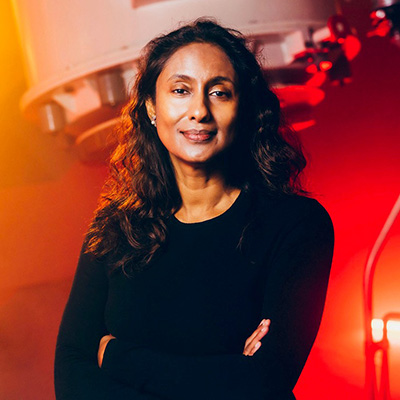
Hiranya Peiris is the 1909 Professor of Astrophysics at the University of Cambridge, the first woman to hold this prestigious chair in its 115-year history. She is a leading cosmologist …
Read More