



Participants
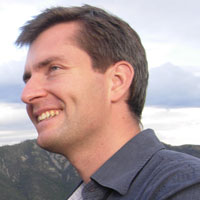
David Charbonneau has been called a “celestial detective” for his systematic search for planets orbiting nearby sun-like stars. Uncovering the secrets of these exoplanets, as they’re called, could conceivably lead to the first direct evidence of life beyond Earth.
Read More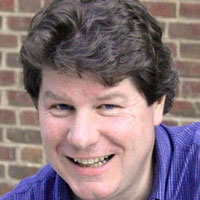
Mark Whittle uses large optical and radio telescopes, including the Hubble Space Telescope, to study processes occurring within 1,000 light years of the central supermassive black hole in Active Galaxies.
Read More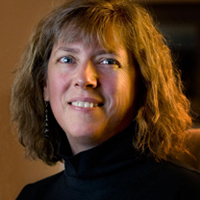
Heidi Hammel is a noted planetary scientist. Currently, she is senior research scientist and codirector of research at the Space Science Institute in Boulder, Colorado.
Read More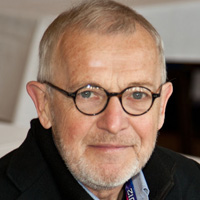
Francis Halzen has spent over 20 years working on telescopes that detect not light, but neutrinos—tiny, high-energy particles released by violent astronomical events like exploding stars, gamma-ray bursts and crashing black holes.
Read More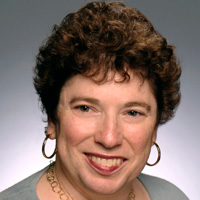
Claire Max studies adaptive optics, a technology that can remove the blurring effects of the earth’s atmosphere and let telescopes on the ground “see” as clearly as if they were in space.
Read More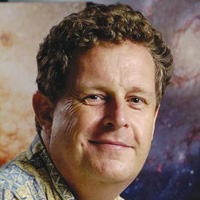
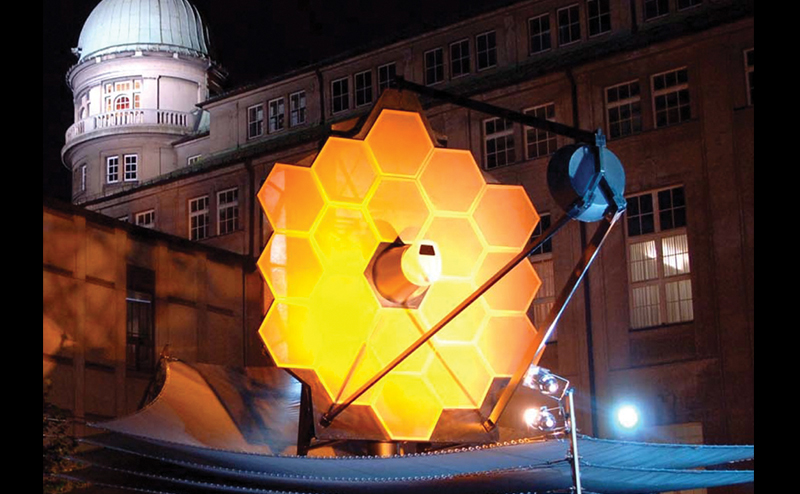
Matt Mountain has been the Director of the Space Telescope Science Institute since September 1, 2005. He leads the 400-person organization responsible for the science operations and education and public outreach of the Hubble Space Telescope and of its planned successor, the James Webb Space Telescope.
Read More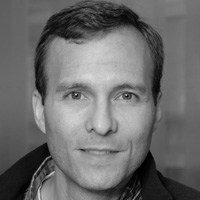
John Kovac is an associate professor in the Astronomy and Physics Departments at Harvard University. His cosmology research focuses on observations of the cosmic microwave background to reveal signatures of the physics that drove the birth of the universe.
Read More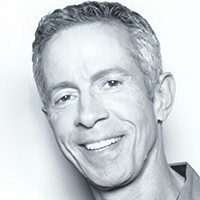
Peter Staley has been a long-term AIDS and gay rights activist, first as a member of ACT UP New York, then as the founding director of TAG, the Treatment Action Group. He served on the board of the American Foundation for AIDS Research (amfAR) for 13 years.
Read More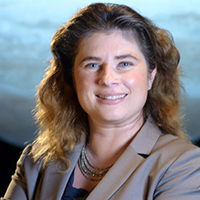
Michelle Thaller is a nationally recognized spokesperson for astronomy and science and the Assistant Director of Science at NASA’s Goddard Spaceflight Center. She has a Bachelor’s in astrophysics from Harvard and a Ph.D. from Georgia State University.
Read More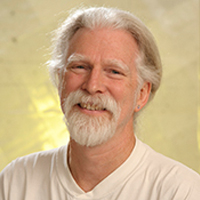
Steve B. Howell is currently the Head of Space Science and Astrobiology for the NASA Ames Research Center. He previously was the project scientist for
NASA’s premier exoplanet finding missions: Kepler and K2. Howell has written over 800 scientific publications, numerous popular and technical articles, and has authored and edited eight books on astronomy and astronomical instrumentation.
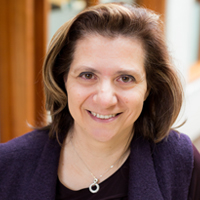
Vicky Kalogera directs the Center for Interdisciplinary Exploration and Research in Astrophysics (CIERA), and is the Daniel I. Linzer Distinguished University Professor in the Department of Physics and Astronomy at Northwestern. Kalogera is lead astrophysicist in the LIGO Scientific Collaboration (LSC)
Read More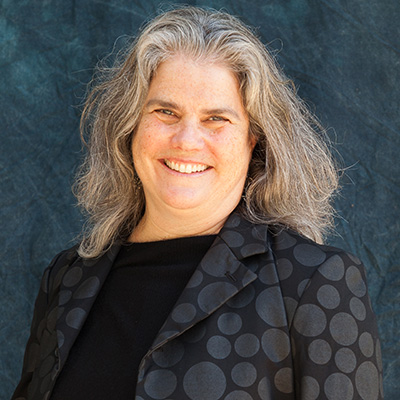
Nobel Laureate
Andrea M. Ghez, professor of Physics and Astronomy and Lauren B. Leichtman & Arthur E. Levine chair in Astrophysics, is one of the world’s leading experts in observational astrophysics and …
Read More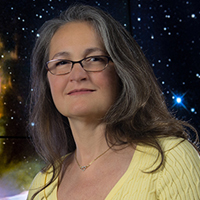
Padi Boyd is the project scientist for the Transiting Exoplanet Survey Satellite (TESS) Mission (a NASA Explorer Mission launched in 2018), and chief of the Exoplanets and Stellar Astrophysics Laboratory in the Astrophysics Science Division, at NASA’s Goddard Space Flight Center.
Read More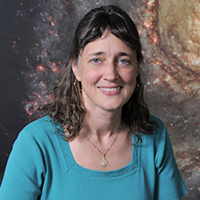
Dr. Jennifer Wiseman is a senior astrophysicist at NASA’s Goddard Space Flight Center in Greenbelt, Maryland, where she serves as the senior project scientist for the Hubble Space Telescope.
Read More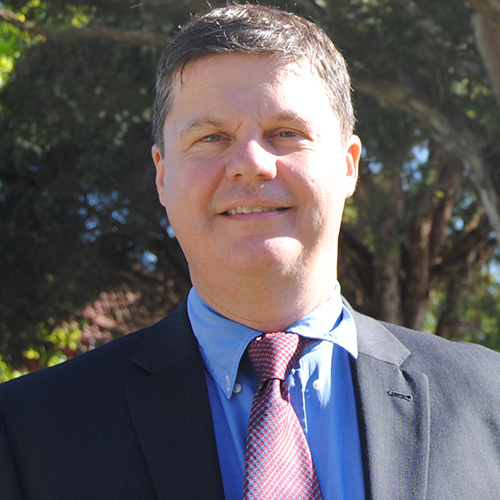
Karl Glazebrook is a Distinguished Professor of Astronomy at the Centre for Astrophysics and Supercomputing at Swinburne University of Technology in Melbourne. Karl is an observational astronomer whose research interests …
Read More