



Participants
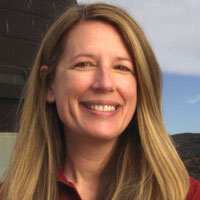
Laura Danly is a spectroscopist specializing in ultraviolet observations from space satellites. Her research focuses on the large-scale distribution and dynamics of the interstellar medium and its relationship to galaxy evolution.
Read More
Heidi Hammel is a noted planetary scientist. Currently, she is senior research scientist and codirector of research at the Space Science Institute in Boulder, Colorado.
Read More
Glennys Farrar is a collegiate professor of physics at New York University. She has made seminal contributions to theoretical particle physics, including demonstrating that quarks are not just mathematical constructs but are actually physically present in matter and pioneering the search for supersymmetry.
Read More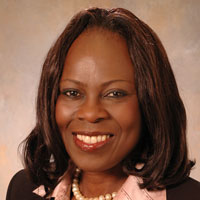
Olufunmilayo Olopade is a Walter L. Palmer Distinguished Service Professor and Associate Dean for Global Health at The University of Chicago Medical Center. Olopade graduated with distinction from the University of Ibadan College of Medicine in Nigeria.
Read More
Natalie Batalha is a UC Presidential Chair, Professor of Astronomy and Astrophysics, and Director of Astrobiology at the University of California, Santa Cruz. She will lead the Early Release Science program for transiting exoplanets — a scientific community effort to acquire some of the first observations of exoplanets with the James Webb Space Telescope.
Read More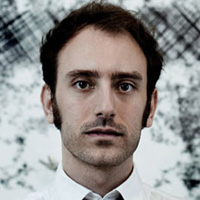
Tristan Perich’s work is inspired by the aesthetic simplicity of math, physics and code. WIRE magazine describes his compositions as “an austere meeting of electronic and organic.”
Read More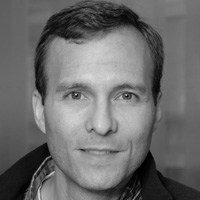
John Kovac is an associate professor in the Astronomy and Physics Departments at Harvard University. His cosmology research focuses on observations of the cosmic microwave background to reveal signatures of the physics that drove the birth of the universe.
Read More
Peter Staley has been a long-term AIDS and gay rights activist, first as a member of ACT UP New York, then as the founding director of TAG, the Treatment Action Group. He served on the board of the American Foundation for AIDS Research (amfAR) for 13 years.
Read More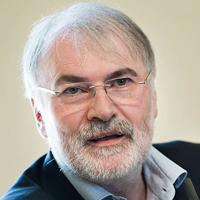
Marco Bersanelli is Professor of Astronomy and Astrophysics and Director of the Ph.D. School in Physics, Astrophysics and Applied Physics at the University of Milan, Italy.
Read More
Michelle Thaller is a nationally recognized spokesperson for astronomy and science and the Assistant Director of Science at NASA’s Goddard Spaceflight Center. She has a Bachelor’s in astrophysics from Harvard and a Ph.D. from Georgia State University.
Read More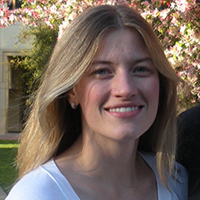
Dr. Sarah Kapnick is a National Science Foundation Postdoctoral Research Fellow in the Atmospheric and Oceanic Sciences Program at Princeton University and the United States National Oceanic and Atmospheric Administration’s Geophysical Fluid Dynamics Laboratory.
Read More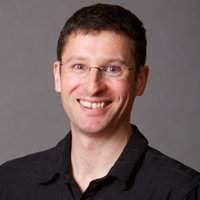
Frans Pretorius is a Professor of Physics at Princeton University. His primary field of research is general relativity, specializing in numerical solution of the Einstein equations.
Read More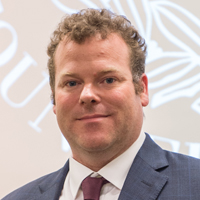
Duncan Brown is the Charles Brightman Professor of Physics at Syracuse University. Brown has worked in gravitational-wave astronomy for 20 years and played a lead role in LIGO’s discovery of binary black hole and binary neutron star collisions. Brown’s research involves using gravitational-wave observations to understand the nature of the universe.
Read More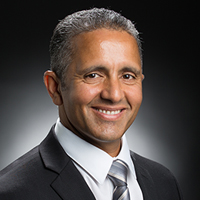
Dr. Nour E. Raouafi is a solar physicist. He is the project scientist of NASA’s Parker Solar Probe mission. He obtained his PhD from the University of Paris XI. His research spreads over a wide range of solar and heliospheric areas with an emphasis on the dynamic solar corona via the analysis of spectral and imaging observations, theory, and modeling.
Read More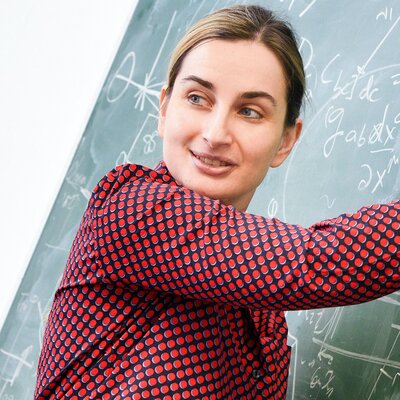
Lise Meitner Award
Anna Ijjas is a theoretical and computational physicist, working in gravitation and cosmology, whose research is aimed at the most fundamental questions about the universe: what is the mechanism that …
Read More
Brian Schmidt shares the 2011 Nobel Prize in Physics with Adam Riess and Saul Perlmutter for their discovery of the accelerating expansion of the universe through observations of distant supernovae. …
Read More