

Participants
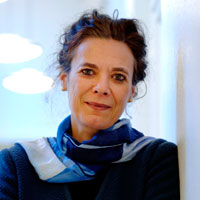
Louise O. Fresco is an expert in the intersection of international development, agriculture and food, advising the Dutch government on socio-economic policy and climate change.
Read More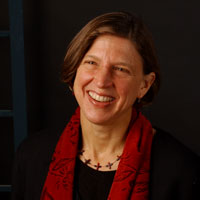
Pamela Ronald is Professor at the University of California, Davis, where she studies the role that genes play in a plant’s response to its environment. Her laboratory has genetically engineered rice for resistance to diseases and flooding, which are serious problems of rice crops in Asia and Africa.
Read More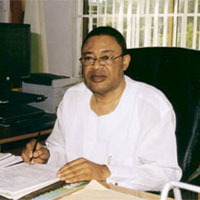
Monty Jones is co-winner of the prestigious 2004 World Food Prize, awarded for his discovery of the genetic process to create the New Rice for Africa (NERICA) which gives higher yields, shorter growth cycles and more protein content than its Asian and African parents.
Read More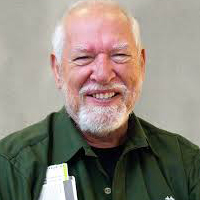
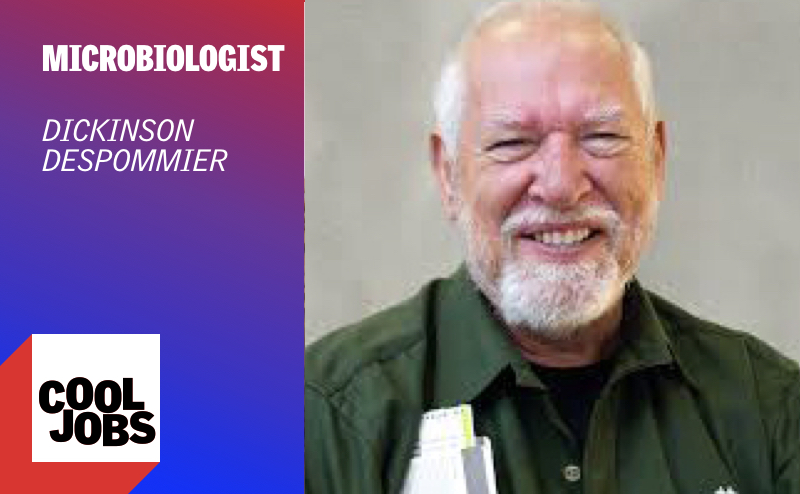
Dickson Despommier is a trailblazer, devising solutions to problems in agriculture and public health that likely will be magnified by climate change. A microbiologist, he is a Professor of Public Health at Columbia University’s Mailman School, where he developed the idea of growing food in urban farm skyscrapers.
Read More
An activist who is known as “the Ralph Nadar of Canada,” Maude Barlow is the best-selling author of 16 books, including the recently released Blue Covenant: The Global Water Crisis and the Coming Battle for the Right to Water.
Read More
David Battisti is The Tamaki Chair of Atmospheric Sciences at the University of Washington. His research is focused on understanding the natural variability in climate that stems from the interaction between the ocean, atmosphere, land and sea ice. He is also studying the impacts of natural climate variability and climate change on global food security.
Read More
Peter Pringle is the author of The Murder of Nikolai Vavilov and co-author of nine previous books. His book, Food Inc., traced the history of biotech agriculture. The former Moscow bureau chief for The Independent, he has also written for The New York Times, The Washington Post, The Atlantic, The New Republic, and The Nation.
Read More
Mark Kurlansky is a former commercial fisherman and New York Times bestselling author of Cod: A Biography of the Fish That Changed the World, Salt: A World History, The Big Oyster: History on the Half Shell, and 16 other books.
Read More
Hannah Waters writes about science for Nature Medicine and her blog Culturing Science. Before that, she studied the epigenetics of aging in Philadelphia, marine food webs off the coast of Oregon, and coastal conservation in Maine.
Read More
Michael Osterholm is one of the nation’s foremost experts in public health, infectious disease and biosecurity. He is the director of the Center for Infectious Disease Research and Policy at the University of Minnesota.
Read More
Sebastien Gouin is intellectual property and venture capital technical manager at Vestergaard Frandsen, working out of headquarters in Lausanne, Switzerland, but spends much of his time traveling to evaluate new innovative technologies being fostered in labs, startups, and university incubators across the world.
Read More
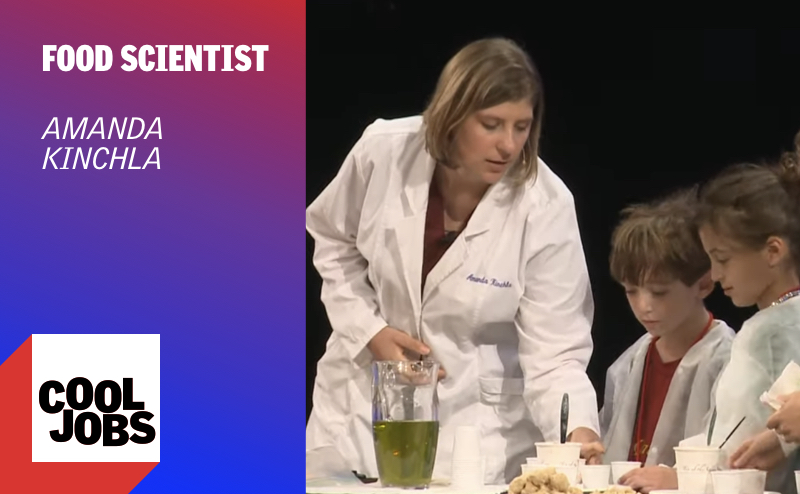
Amanda Kinchla is the Food Science Extension Specialist at the University of Massachusetts Amherst. She leads a new Food Science Extension program at UMass that focuses on applied research and food science education to support the Massachusetts and national food industry.
Read More
Peter Staley has been a long-term AIDS and gay rights activist, first as a member of ACT UP New York, then as the founding director of TAG, the Treatment Action Group. He served on the board of the American Foundation for AIDS Research (amfAR) for 13 years.
Read More
Harold McGee writes about the science of food and cooking. He has been named food writer of the year by Bon Appetit magazine, and to the TIME 100, an annual list of the world’s most influential people. He started out studying physics and astronomy at the California Institute of Technology, and then English literature at Yale University.
Read More
Rachel Dutton, Ph.D. is a Bauer fellow at the Harvard University Center for Systems Biology. After receiving her Ph.D. in microbiology from Harvard Medical School, she founded her own lab with the mission of using cheese as a way to understand microbial ecosystems.
Read More
Maxime Bilet is the co-author of Modernist Cuisine: The Art and Science of Cooking, which received the 2012 Book of the Year Award from the James Beard Foundation and the International Association of Culinary Professionals’ Visionary Achievement, among many other awards. He is also the co-author and of Modernist Cuisine at Home.
Read More
Amy Rowat is an assistant professor at the University of California, Los Angeles. Originally from Canada, she studied physics and various other subjects at Mount Allison University and completed her graduate work in Denmark.
Read More
In 2004, Dave Arnold founded the Museum of Food and Drink in New York to promote learning about the history and culture of food. In 2005, The International Culinary Center, home of The French Culinary Institute, tapped him to head its new culinary technology department until 2013.
Read More
Kent Kirshenbaum is a professor in the Department of Chemistry at New York University. He has appeared on the Food Network, the Cooking Channel, the Science Channel, the Discovery Channel, Sid the Science Kid (PBS), and at the Wellington-on-a-Plate Festival.
Read More
Wylie Dufresne opened WD-50 in 2003, on Manhattan’s Lower East Side. His partners in the venture are Chef Jean-Georges Vongerichten and restaurateur Phil Suarez.
Read More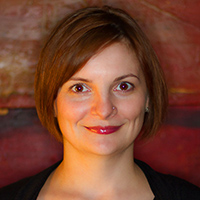
Anne E. McBride is the culinary program and editorial director for strategic initiatives at The Culinary Institute of America, where her responsibilities include leading the programming for the Worlds of Flavor® International Conference & Festival.
Read More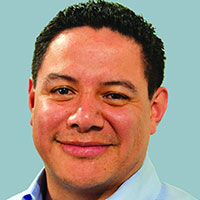
César Vega earned his doctorate in food science from the University College Cork in Ireland. His areas of expertise include dairy products, particularly ice cream and yogurt, the physical chemistry of cocoa and chocolate, and the science of cooking.
Read More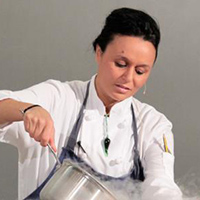
After rapidly rising through the ranks of some of the world’s finest restaurants, Najat Kaanache “The Pilgrim Chef” continues to demonstrate her culinary skills not only with her creative restaurant concept but also with her tireless passion for culinary innovation, education, and clean food advocacy.
Read More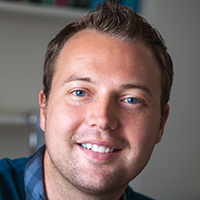
Robin Dando, originally from the UK, is a professor at Cornell University. His lab studies the neurotransmitter interactions and signaling events that occur within the mammalian taste system. Our sense of taste is one of the strongest drives that we possess, and is inexorably linked to emotions, memories, and our quality of life.
Read More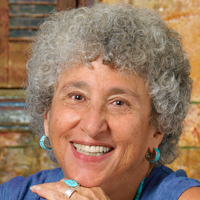
Marion Nestle is the Paulette Goddard Professor of Nutrition, Food Studies, and Public Health at NYU. She holds a doctorate in molecular biology. Her books, Food Politics and What to Eat won James Beard Awards; Why Calories Count won the 2013 IACP food matters book award.
Read More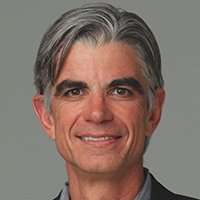
Michael Moss is the author of the No. 1 New York Times bestseller Salt Sugar Fat: How the Food Giants Hooked Us (Random House, 2013). He has been an investigative reporter with The New York Times since 2000.
Read More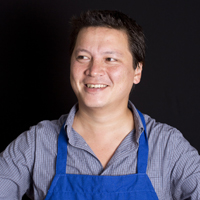
J. Kenji López-Alt is the author of the New York Times Best-Selling cookbook The Food Lab: Better Home Cooking Through Science, the managing culinary director of Serious Eats, and a columnist for Cooking Light.
Read More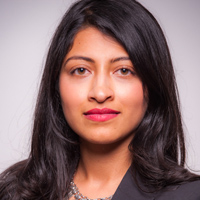
Selena Ahmed is an assistant professor and Program Leader of Sustainable Food and Bioenergy Systems at Montana State University, as well as a partner of Shoots & Roots Bitters. She examines the effects of global environmental change, policy, and management on food system quality and the resulting linkages to land-use strategies and community well-being.
Read More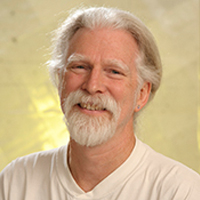
Steve B. Howell is currently the Head of Space Science and Astrobiology for the NASA Ames Research Center. He previously was the project scientist for
NASA’s premier exoplanet finding missions: Kepler and K2. Howell has written over 800 scientific publications, numerous popular and technical articles, and has authored and edited eight books on astronomy and astronomical instrumentation.
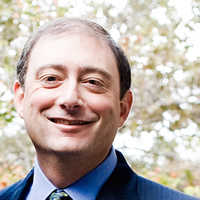
Ira Breite is a gastroenterologist at NYU Langone Medical Center and an expert in food poisoning of all types. He works day in and day out to figure out what precisely is ailing his patients and how to fix it. As one of the hosts of the Sirius XM’s Doctor Radio channel, Dr. Breite also aims to answer any medical question people can think of.
Read More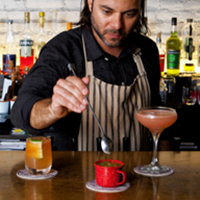
Christian Schaal has been bartending in New York for over a decade. In that time, he has contributed original cocktails to chef-driven restaurants such as Estela and Alder and run the bar program at Nights & Weekends and Manhattan Inn.
Read More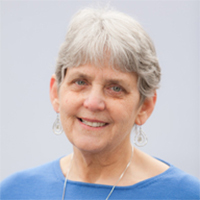
Professor Mary Carskadon is an authority on adolescent sleep. Her research raised public awareness about the consequences of insufficient sleep in adolescents and influenced education policy, prompting school districts to delay school start times for teens.
Read More
Brian Elbel is an associate professor of population health and health policy at the NYU School of Medicine, where he heads the section on health choice, policy and evaluation within the department of population health, and at the NYU Wagner Graduate School of Public Service.
Read More
Kubi Ackerman is the Director of the Future City Lab at the Museum of the City of New York. Ackerman has been conducting design-based research in New York City since 2004. His work focuses on urban design strategies for resilience, with a particular focus on urban food systems, green infrastructure, transportation, and energy.
Read More
Caleb Harper is the Principal Investigator and Director of the Open Agriculture (Open Ag) Initiative at the MIT Media Lab. He leads a diverse group of engineers, architects, and scientists in the exploration and development of future food systems.
Read More
Chef Christopher Burgess is currently the executive chef/owner of Fresh Kitchen, where he spends his time between the kitchen and local organic hydroponic farms. Burgess grew up working in kitchens, where he learned at an early age that quality food was an essential ingredient to good living.
Read More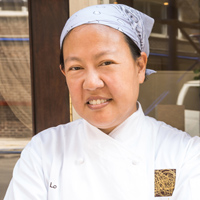
Anita Lo is chef and restaurateur. In 2001, she was named by Food & Wine magazine one of ten “Best New Chefs in America”. She studied French Literature at Columbia University, but has never worked in any field other than the restaurant business, having been inspired by food while studying abroad in Paris in college.
Read More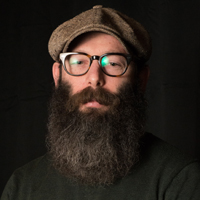
Growing up in South Africa, Master distiller Kevin Herson, formulated concoctions with his now antique chemistry set. His love for culture led him to travel the world and experience food and drinks of all customs and varieties. With a doctorate degree, “The Doc” has developed a unique palate for distilling, introducing delightful spirits to the craft beverage industry.
Read More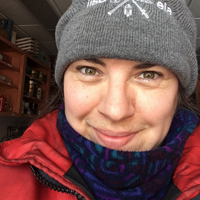
Cyndy Desjardins is a Food Web Biologist at the International Institute for Sustainable Development Experimental Lakes Area. She has extensive field experience in limnology research, having managed and trained both laboratory teams and fieldwork teams in a large-scale, multi-year aquatic ecology project.
Read More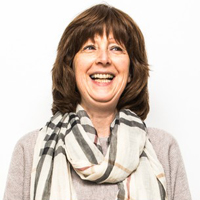
Susan MacIsaac graduated with undergrad and graduate degrees in plant physiology. Now as Head of Agricultural Science at Bowery, MacIsaac is on a mission to produce clean, healthy food in indoor farms.
Read More
Melissa Metrick is a graduate of the master’s program in Food Studies at New York University, where she was instrumental in establishing the NYU Urban Farm Lab, an educational greenspace located right on the university’s campus.
Read More