


Participants
David Charbonneau has been called a “celestial detective” for his systematic search for planets orbiting nearby sun-like stars. Uncovering the secrets of these exoplanets, as they’re called, could conceivably lead to the first direct evidence of life beyond Earth.
Read More
Steven W. Squyres is a veteran of several of NASA’s planetary exploration missions, including the Voyager mission to Jupiter and Saturn, the Magellan mission to Venus, and the Near Earth Asteroid Rendezvous mission.
Read More
Jill Tarter has devoted her career to hunting for signs of sentient beings elsewhere through a systematic search for radio signals from Earth’s galactic neighbors. She has received wide recognition in the scientific community, including the Lifetime Achievement Award from Women in Aerospace, two Public Service Medals from NASA and a 2009 TEDPrize.
Read More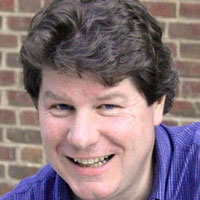
Mark Whittle uses large optical and radio telescopes, including the Hubble Space Telescope, to study processes occurring within 1,000 light years of the central supermassive black hole in Active Galaxies.
Read More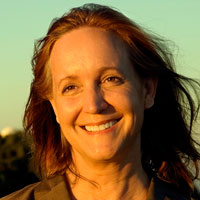
Debra Fischer is a planet hunter who has discovered hundreds of worlds orbiting other stars, most of them gas giants, like Jupiter or Saturn. She is currently working to detect lower mass, Earth-like planets.
Read More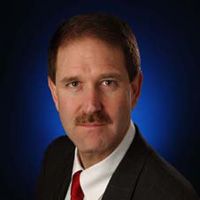
John M. Grunsfeld was named Associate Administrator for the Science Mission Directorate at NASA Headquarters in Washington, D.C. in 2012. He previously served as the Deputy Director of the Space Telescope Science Institute in Baltimore.
Read More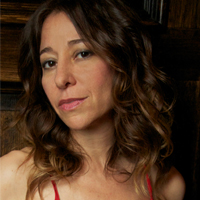
Janna Levin is a professor of physics and astronomy at Barnard College of Columbia University and the author of Black Hole Blues and Other Songs from Outer Space.
Read More
Steve Mirsky has written the humorous Anti Gravity column for Scientific American since 1995 and is a member of the magazine’s board of editors. Since 2006 his primary responsibilities have been overseeing the magazine’s weekly podcast Science Talk and the daily podcast, 60-Second Science.
Read More
Seth Shostak is an astronomer, lecturer and the author and editor of several books, including the 2009 Confessions of an Alien Hunter: A Scientist’s Search for Extraterrestrial Intelligence (National Geographic). For much of his career, he conducted radio astronomy research on galaxies.
Read More
Neil deGrasse Tyson is the Frederick P. Rose Director of the Hayden Planetarium at the American Museum of Natural History in New York City. He is the author of several books and hosts the NOVA ScienceNow program on PBS. Tyson is best known as an ardent popularizer of astronomy and astrophysics.
Read More
Evalyn Gates is the Assistant Director of the Kavli Institute for Cosmological Physics at the University of Chicago and a Senior Research Associate in the Department of Astronomy and Astrophysics. Her research focuses on theoretical cosmology and particle astrophysics.
Read More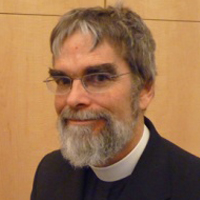
Brother Guy Consolmagno, SJ, earned undergraduate and masters’ degrees from MIT, and a Ph. D. in Planetary Science from the University of Arizona. He was a researcher at Harvard and MIT, served in the US Peace Corps (Kenya), and taught university physics at Lafayette College, Pennsylvania, before entering the Jesuits in 1989.
Read More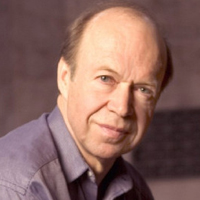
Dr. James Hansen is director of the NASA Goddard Institute for Space Studies and Adjunct Professor at Columbia University’s Earth Institute. An active researcher in planetary atmospheres and climate science for nearly 40 years, Hansen is best known for his Congressional testimonies on climate change that widely elevated the awareness of global warming.
Read More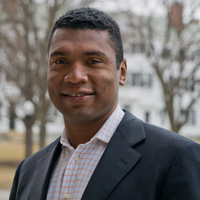
Theoretical physicist Stephon Alexander explores unresolved questions about the early universe. Also an accomplished jazz musician, Alexander has collaborated with Grammy Award-winning musician Will Calhoun.
Read More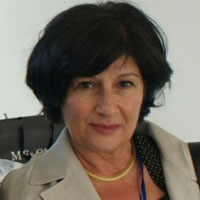
Elena Aprile is a professor of physics at Columbia University and is internationally recognized for her experimental work with noble liquid detectors for research in gamma-ray astrophysics and particle astrophysics. She is the founder and spokesperson of the XENON Dark Matter experiment.
Read More
Steven Weinberg was a professor of physics and astronomy at the University of Texas at Austin. His honors included the Nobel Prize in Physics and National Medal of Science, election to numerous academies, and 16 honorary doctoral degrees.
Read More
As the director of astrovisualization at the American Museum of Natural History, Carter Emmart directs the museum’s groundbreaking space shows and heads up development of an interactive 3D atlas called The Digital Universe.
Read More
Priyamvada Natarajan is the Joseph S. and Sophia S. Fruton Professor of Astronomy and Physics at Yale. She is an astrophysicist with research interests in cosmology, gravitational lensing, and black …
Read More
MIT physicist Enectali Figueroa-Feliciano works at the intersection of cosmology, particle physics, astronomy, and engineering.
Read More
Charles Liu is a professor of astrophysics at the City University of New York’s College of Staten Island and an associate with the Hayden Planetarium and Department of Astrophysics at the American Museum of Natural History in New York. His research focuses on colliding galaxies, quasars, and the star formation history of the Universe.
Read More
Mike Francis portrays Galileo and the Stargazer’s Apprentice using over thirty years of professional acting experience on stage, film, and television.
Read More
David Spergel studies the big questions in cosmology and astrophysics: How large is the universe, and what is its shape? Is it finite? What are the dark matter and dark …
Read More
Claire Max studies adaptive optics, a technology that can remove the blurring effects of the earth’s atmosphere and let telescopes on the ground “see” as clearly as if they were in space.
Read More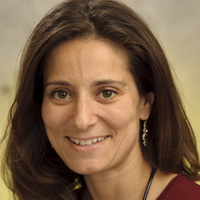
Natalie Batalha is a UC Presidential Chair, Professor of Astronomy and Astrophysics, and Director of Astrobiology at the University of California, Santa Cruz. She will lead the Early Release Science program for transiting exoplanets — a scientific community effort to acquire some of the first observations of exoplanets with the James Webb Space Telescope.
Read More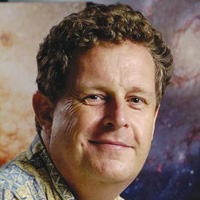
Matt Mountain has been the Director of the Space Telescope Science Institute since September 1, 2005. He leads the 400-person organization responsible for the science operations and education and public outreach of the Hubble Space Telescope and of its planned successor, the James Webb Space Telescope.
Read More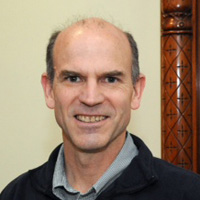
John Carlstrom studies the origin and evolution of the universe from the very bottom of the Earth. Carlstrom is the Subramanyan Chandrasekhar Professor of Astronomy, Astrophysics, and Physics at the University of Chicago, and deputy director of the Kavli Institute for Cosmological Physics.
Read More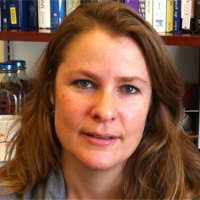
Britt Reichborn-Kjennerud is an experimental astrophysicist who uses measurements of the cosmic microwave background, the afterglow of the big bang, to understand the origin, composition, and evolution of the universe.
Read More
John Kovac is an associate professor in the Astronomy and Physics Departments at Harvard University. His cosmology research focuses on observations of the cosmic microwave background to reveal signatures of the physics that drove the birth of the universe.
Read More
Kelle Cruz is an Assistant Professor in the Physics and Astronomy Department at Hunter College and a Research Associate at the American Museum of Natural History (AMNH), Department of Astrophysics.
Read More
Thorsten Ritz is a biophysicist interested in the role of quantum mechanics in biological systems, ranging from photosynthetic light harvesting systems to sensory cells. He has championed the idea that a quantum mechanical reaction may lie at the heart of the magnetic compass of birds and other animals.
Read More
Peter Staley has been a long-term AIDS and gay rights activist, first as a member of ACT UP New York, then as the founding director of TAG, the Treatment Action Group. He served on the board of the American Foundation for AIDS Research (amfAR) for 13 years.
Read More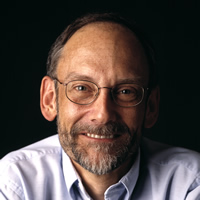
Harold McGee writes about the science of food and cooking. He has been named food writer of the year by Bon Appetit magazine, and to the TIME 100, an annual list of the world’s most influential people. He started out studying physics and astronomy at the California Institute of Technology, and then English literature at Yale University.
Read More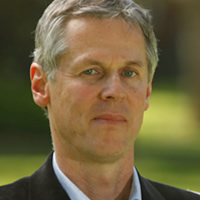
Andreas Albrecht is a leading theoretical cosmologist. He received his Ph.D. from the University of Pennsylvania in 1983 where, with Paul Steinhardt, he wrote one of the original papers on “new” or “slow roll” inflation.
Read More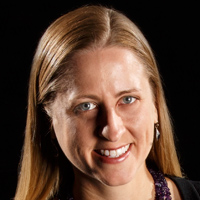
Emily Rice is an assistant professor at the College of Staten Island, City University of New York and a research associate in the astrophysics department of the American Museum of Natural History. She earned her Ph.D. at UCLA studying enigmatic objects called brown dwarfs, which form like stars but then cool and fade to resemble gas giant planets.
Read More
Meg Schwamb is an astronomer and planetary scientist. She is currently a National Science Foundation (NSF) astronomy and astrophysics postdoctoral fellow at Yale University’s Center for Astronomy and Astrophysics (YCAA).
Read More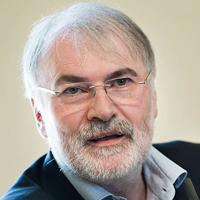
Marco Bersanelli is Professor of Astronomy and Astrophysics and Director of the Ph.D. School in Physics, Astrophysics and Applied Physics at the University of Milan, Italy.
Read More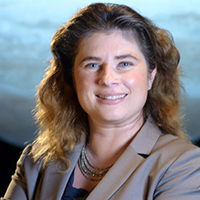
Michelle Thaller is a nationally recognized spokesperson for astronomy and science and the Assistant Director of Science at NASA’s Goddard Spaceflight Center. She has a Bachelor’s in astrophysics from Harvard and a Ph.D. from Georgia State University.
Read More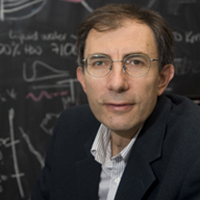
Dimitar Sasselov studies stars and planets at Harvard University, where he is the Phillips Professor of Astronomy. His research explores modes of interaction between light and matter. Sasselov and his team discovered several planets orbiting other stars with novel techniques that he hopes to use to find other planets like Earth.
Read More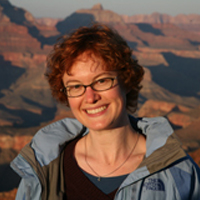
Dr. Emily Rauscher received her B.A. from the University of California at Berkeley in Physics and Astrophysics. Rauscher then came to New York City for grad school, obtaining a Ph.D. in Astronomy from Columbia University.
Read More
Caleb Scharf’s research career spans cosmology, exoplanetary science, and astrobiology. He currently leads efforts at Columbia University in New York to understand the nature of exoplanets and living environments in the universe.
Read More
Amanda Gefter is a physics and cosmology writer and a consultant for New Scientist magazine, where she formerly served as books and arts editor and founded CultureLab.
Read More
Artur B. Chmielewski is the US Rosetta Project Manager. He has managed several flight projects at JPL: the Space Technology 8 mission, Mars Telecommunication Orbiter Rendezvous Experiment, Space Technology 6 mission, Gossamer Program, and Inflatable Antenna Flight Experiment.
Read More
Steve B. Howell is currently the Head of Space Science and Astrobiology for the NASA Ames Research Center. He previously was the project scientist for
NASA’s premier exoplanet finding missions: Kepler and K2. Howell has written over 800 scientific publications, numerous popular and technical articles, and has authored and edited eight books on astronomy and astronomical instrumentation.
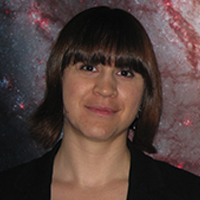
Irene Pease has a bachelor’s degree in physics from the University of Arizona, in Tucson, AZ, where she briefly studied accretion discs around binary pulsars. As Brooklyn’s Friendly Neighborhood Astronomer, she leads astronomy classes indoors and also under the night skies at local parks.
Read More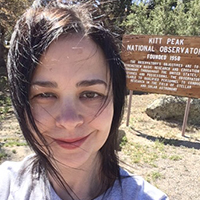
Allyson Sheffield is an observational astronomer whose research focuses on the formation and structure of the Milky Way galaxy. She studies the motion and chemistry of old stars, from which we can infer the evolutionary history of the Milky Way.
Read More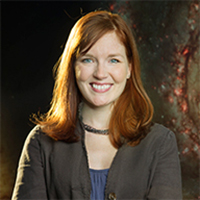
Amber Straughn is an astrophysicist at NASA and a member of the James Webb Space Telescope Project Science Team. Straughn grew up in the small farming town of Bee Branch, Arkansas where her fascination with astronomy began under beautifully dark, rural skies.
Read More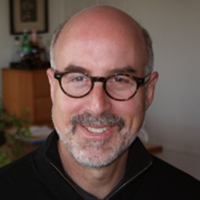
Josh Frieman is a senior staff scientist at the Fermi National Accelerator Laboratory and Professor of Astronomy & Astrophysics. He’s also a member of the Kavli Institute for Cosmological Physics at the University of Chicago.
Read More
Gabriela González is a professor in the Department of Physics and Astronomy at Louisiana State University (LSU), where there is a large group of people working on the detection of gravitational waves, both in theory and experiment.
Read More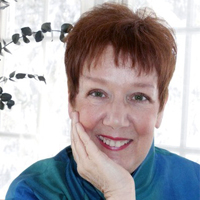
Marcia Bartusiak is an author, journalist, and Professor of the Practice of the Graduate Program in Science Writing at MIT. She writes about the fields of astronomy and physics. Bartusiak has been published in National Geographic, Discover, Astronomy, Sky & Telescope, Science, Popular Science, and more.
Read More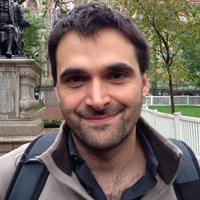
Justin Khoury is associate professor and undergraduate chair of physics & astronomy at the University of Pennsylvania. He obtained his B.Sc. from McGill University and his Ph.D from Princeton University under Paul Steinhardt.
Read More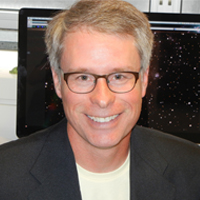
Stacy McGaugh is an astrophysicist and cosmologist who studies galaxies, dark matter, and theories of modified gravity. He is an expert on low surface brightness galaxies, a class of objects in which the stars are spread thin compared to bright galaxies like our Milky Way.
Read More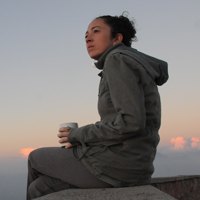
Dr. Jackie Faherty received a Bachelors in Science as a Physics major from the University of Notre Dame in 2001. She received her Ph.D. in Physics from Stony Brook University in 2010 with a thesis entitled the Brown Dwarf Kinematics Project, for which she received the University’s highest honors.
Read More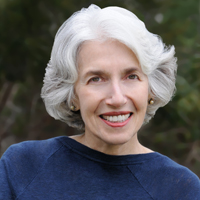
Dava Sobel has been writing about science for forty years, including a series of articles for The New York Times describing her month-long stint as a human subject in a laboratory study of circadian rhythm. Sobel is the author of several bestselling books about the history of astronomy.
Read More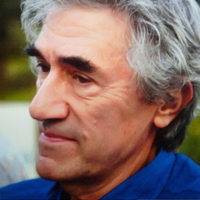
Gino Segrè is a professor of physics and astronomy at the University of Pennsylvania. He has been a visiting professor at New York University/Abu Dhabi, MIT and Oxford University, Chair of the Department of Physics and Astronomy at the University of Pennsylvania and director of Theoretical Physics at the National Science Foundation.
Read More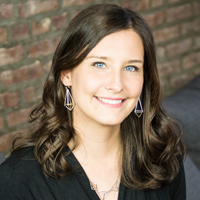
Jana Grcevich is co-author of The Vacation Guide to the Solar System, a travel guide to the planets. She holds a PhD in Astronomy from Columbia University, worked as a postdoctoral fellow at the American Museum of Natural History, and is a data scientist living in New York.
Read More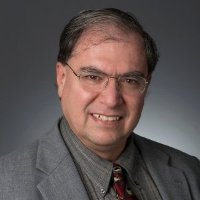
Dr. Kirk Borne is the Principal Data Scientist in the Strategic Innovation Group at Booz-Allen Hamilton since 2015. He was Professor of Astrophysics and Computational Science in the George Mason University (GMU) School of Physics, Astronomy, and Computational Sciences during 2003-2015
Read More
Summer Ash is the Director of Outreach for Columbia University’s Department of Astronomy. Ash is also a freelance science writer and communicator. Her work has been published in The Atlantic, Smithsonian, Now.Space, Scientific American, Slate, and Nautilus.
Read More
Vicky Kalogera directs the Center for Interdisciplinary Exploration and Research in Astrophysics (CIERA), and is the Daniel I. Linzer Distinguished University Professor in the Department of Physics and Astronomy at Northwestern. Kalogera is lead astrophysicist in the LIGO Scientific Collaboration (LSC)
Read More
Nobel Laureate
Andrea M. Ghez, professor of Physics and Astronomy and Lauren B. Leichtman & Arthur E. Levine chair in Astrophysics, is one of the world’s leading experts in observational astrophysics and …
Read More
Lisa Kaltenegger is the director of the Carl Sagan Institute at Cornell and professor in Astronomy. She is fascinated by the new worlds orbiting other Suns. Her research focuses on modeling these new worlds especially on how to spot signs of life.
Read More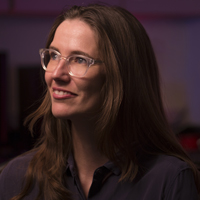
Jocelyn Read is an assistant professor in the Gravitational Wave Physics and Astronomy Center of California State University, Fullerton. She has spent more than a decade studying neutron star astrophysics and gravitational waves.
Read More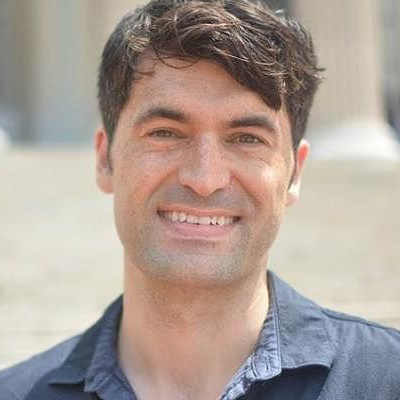
David Kipping is a Professor of Astronomy at Columbia University where he leads the Cool Worlds Lab – a research team primarily focussed on discovering new planets and moons. Kipping’s …
Read More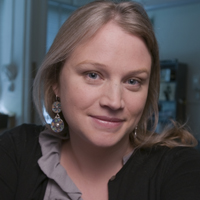
Lindley Winslow’s work focuses on answering big questions about the universe by developing novel particle detectors. She received her BA in physics and astronomy in 2001 and her PhD in physics in 2008, both from the University of California at Berkeley.
Read More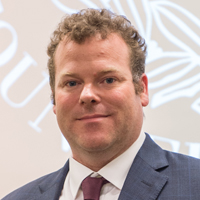
Duncan Brown is the Charles Brightman Professor of Physics at Syracuse University. Brown has worked in gravitational-wave astronomy for 20 years and played a lead role in LIGO’s discovery of binary black hole and binary neutron star collisions. Brown’s research involves using gravitational-wave observations to understand the nature of the universe.
Read More
Leo Lo is a senior at Jericho High School. Lo has conducted nano-optics research at Stony Brook University for 2 years, creating a computer simulation platform that could improve the accuracy of the state-of-the-art optical nano-imaging method.
Read More
Joseph Silk is Homewood Professor of Physics and Astronomy at Johns Hopkins University in Baltimore, a researcher at Institut d’Astrophysique de Paris, and a Senior Fellow at the Beecroft Institute for Particle Astrophysics and Cosmology at the University of Oxford.
Read More
Marcelo Gleiser is the Appleton Professor of Natural Philosophy and a professor of physics and astronomy at Dartmouth College. He obtained his PhD from King’s College London and received the 1994 Presidential Faculty Fellows Award from the White House.
Read More
Dr. Jennifer Wiseman is a senior astrophysicist at NASA’s Goddard Space Flight Center in Greenbelt, Maryland, where she serves as the senior project scientist for the Hubble Space Telescope.
Read More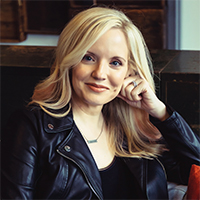
Kimberly Arcand is one of the world’s preeminent experts in astronomy visualization and has been a pioneer in 3D imaging and printing in this field. Arcand began her career in molecular biology and public health.
Read More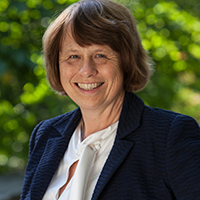
Ewine van Dishoeck is Professor of molecular astrophysics at the Leiden Observatory in the Netherlands. She is co-editor of the Annual Review of Astronomy and Astrophysics, and was president of the International Astronomical Union between 2018 and 2021.
Read More
Conny Aerts is Professor of Astronomy and Vice-Dean of Communication & Outreach in the Faculty of Science at KU Leuven. She is also a part-time professor of Asteroseismology at the …
Read More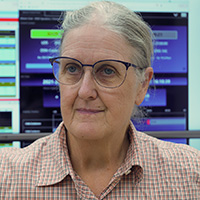
Marcia J. Rieke is a Professor of Astronomy at the University of Arizona, and is the principal investigator for the near-infrared camera (NIRCam) on the James Webb Space Telescope. Rieke …
Read More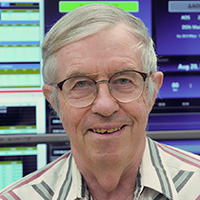
George Rieke is Regents Professor of Astronomy and Planetary Sciences at the University of Arizona, Tucson, and serves as the science team lead for the James Webb Space Telescope’s Mid-Infrared …
Read More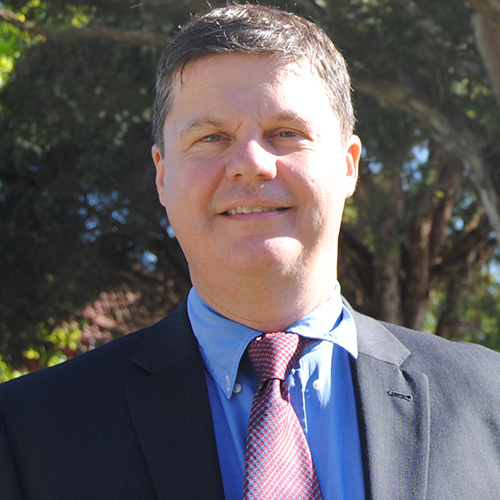
Karl Glazebrook is a Distinguished Professor of Astronomy at the Centre for Astrophysics and Supercomputing at Swinburne University of Technology in Melbourne. Karl is an observational astronomer whose research interests …
Read More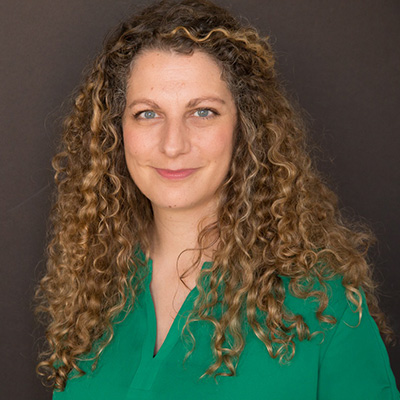
Author, Physics Historian
Elise Crull received a B.Sc. with Honors in Physics and Astronomy at Calvin University and an M.A. and Ph.D. in History & Philosophy of Science from the University of Notre …
Read More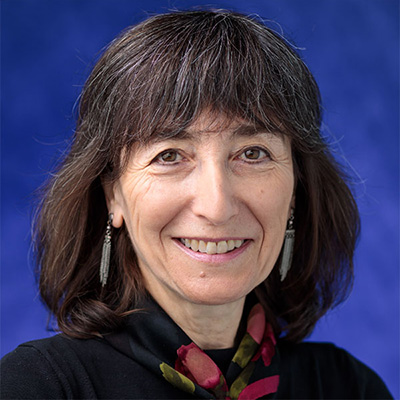
Wendy Freedman is the John and Marion Sullivan University Professor in Astronomy and Astrophysics at the University of Chicago. Her research is in observational cosmology (measures of the expansion rate …
Read MoreBrian Schmidt shares the 2011 Nobel Prize in Physics with Adam Riess and Saul Perlmutter for their discovery of the accelerating expansion of the universe through observations of distant supernovae. …
Read More