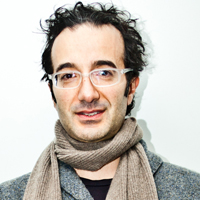


Niels Rattenborg

Niels Rattenborg aims to gain insight into the function of sleep through studying birds, the only taxonomic group to independently evolve sleep patterns like those in mammals, including humans. In 1999, Rattenborg discovered that sleeping birds can literally keep an eye open for predators when needed.
The Sleep Research Society awarded him the Young Investigator Award for this research. More recently, his group revealed that the depth of sleep in different parts of the avian brain depends on how they were used during prior wakefulness. Perhaps surprisingly, given this link between brain use and sleep need, some birds engage in non-stop flights lasting days, weeks, or longer. Rattenborg is currently using microchip technology to determine whether such birds have evolved an ability to sleep in flight or to temporarily forgo sleep. These studies and a previous one by his team on sloths are the first to record sleep-related brain activity in animals living in the wild. By moving comparative sleep research out of the artificial laboratory and into the wild, Rattenborg’s work opens the door to a new age of sleep research with the potential to yield novel insight into the purpose of sleep.
Rattenborg is the leader of the Sleep and Flight group at the Max Planck Institute for Ornithology in Seewiesen, Germany.
 Share
Share