
Clicky

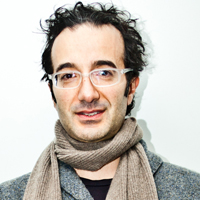
Douglas Fields

Neurologist, Author

An internationally recognized authority on neuron-glia interactions, brain development, and the cellular mechanisms of memory, Douglas Fields serves on the editorial board of several neuroscience journals and is the author of over 150 articles for publications that include Scientific American, Outside Magazine, Odyssey Magazine, and The Washington Post. He has written on-line columns for the Huffington Post, Psychology Today, and Scientific American and is founder of the scientific journal Neuron Glia Biology, where he is the editor-in-chief.
Additionally, Fields acts as a scientific advisor to the Scientific American Mind and Odyssey magazines. He is also the author of The Other Brain, which gives readers an eyewitness view of the discovery of brain cells that communicate without using electricity.

Chief of the Section on Nervous System Development and Plasticity at the National Institute of Child Health and Human Development (a part of the National Institutes of Health (NIH)), Fields is also adjunct professor in the Neuroscience and Cognitive Science Program at the University of Maryland, College Park. He received his B.A. from UC Berkeley and his M.A. from San Jose State University. In 1985, Fields received his Ph.D. from the University of California, San Diego and the Neuroscience Department at the Scripps Institute of Oceanography for his research on the ability of sharks and rays to sense bioelectric fields. Before starting his research laboratory at the NIH in 1994, he held postdoctoral fellowships at Stanford University, Yale University, and the National Institutes of Health. In addition to science, Fields enjoys building guitars, rock-climbing, and scuba diving. 

Blog Posts

  • Genius Across Cultures and the “Google Brain”

    I recently had the opportunity to sit down with other scientists—along with famed director Julie Taymor and legendary composer Philip Glass—to wrestle with the riddle of genius. I found that Taymor made about cultural and environmental influences on cognitive traits very perceptive. We have always understood that whether you are Muslim or Mormon largely depends on where you were born and raised, but neuroscience is showing us that this environmental influence on the mind goes beyond teaching—the physical structure of the brain is molded by the environment in which it is raised. Read »
  • The Other Brain of Genius

    glia Cerebral glial cells span the brain. Are they the key to understanding genius ability? Genius—is it the seed or the soil? Beethoven and Einstein are examples of extraordinarily creative geniuses. Was their vastly superior brain the chance outcome of a genetic dice roll, or was their genius forged by their experience? What if Beethoven had never touched a keyboard? Or what if he first encountered those intriguing keys not as a child, but as a middle-aged man? Einstein exhibited eccentricities that to some observers appear to border on dysfunction. Does extreme creativity straddle the lines of madness? What, exactly, about the brain of a genius gives them such monumental intellect and creativity? Read »

Follow us