Full Programs
- The Mind
- The Cosmos
- Reality
- Life
- Earth
- Arts
- Live
- Replay
-
All Creatures Great and Smart
Brian Hare, Vanessa Woods, Jeremy Niven, Patrick R. Hof, Klaus Zuberbühler, Jad AbumradJoin a panel of leading scientists whose research is challenging long-held assumptions about the differences between “animal” and “human”—and learn about pin-sized brains that can count, categorize, and hold a grudge against those who’ve tried to swat them.
-
Beautiful Minds: The Enigma of Genius
Philip Glass, Julie Taymor, Rex Jung, R. Douglas Fields, Dean Keith Simonton, Brian GreeneImmanuel Kant, who coined the term genius in the 1700s, defined it as the rare capacity to independently understand concepts that would normally have to be taught by another person. Since then, the spectrum of abilities that we call genius has widened, but pivotal questions remain: What exactly is genius?
-
Consciousness: Explored and Explained
Charlie Kaufman, Giulio Tononi, Alan AldaConsciousness is a terrible curse. Or is it? Filmmaker Charlie Kaufman, neuroscientist Giulio Tononi, and moderator Alan Alda explore and explain the art, science, and mystery of consciousness.
-
Eye Candy: Science, Sight, Art
Jules Feiffer, Buzz Hays, Patrick Cavanagh, Margaret S. Livingstone, Christopher W. Tyler, Lawrence WeschlerThere may be universal biological principles that drive art’s appeal, and its capacity to engage our brains and our interest.
-
Hallucinations with Oliver Sacks
John Hockenberry, Oliver SacksFamed neurologist Oliver Sacks joined award-winning journalist John Hockenberry to discuss Sacks' latest book, which explores the bewitching and surreal world of hallucinations.
-
How We Bounce Back: The New Science of Human Resilience
Bill Blakemore, George Bonanno, Dennis Charney, Fran Norris, Matthieu RicardWhy do some people bounce back from traumatic events while others do not? Leading thinkers from around the world explore these and other questions about the science of human resiliency.
-
Keeping Secrets: Cryptography in a Connected World
Josh Zepps, Brian Snow, Tal Rabin, Orr Dunkelman, Simon SinghSince the earliest days of communication, clever minds have devised methods for enciphering messages to shield them from prying eyes.
-
Madness Redefined: Creativity, Intelligence and the Dark Side of the Mind
Cynthia McFadden, James Fallon, Kay Redfield Jamison, Elyn SaksThe notion of a “tortured genius” or “mad scientist” may be more than a romantic aberration. Research shows that bipolar disorder and schizophrenia correlate with high creativity and intelligence, raising tantalizing questions.
-
Man-Made Minds: Living with Thinking Machines
Faith Salie, David Ferrucci, Eric Horvitz, Hod Lipson, Rodney BrooksWho, or what, are these thinking machines? We were joined by IBM’s WATSON, the computer Jeopardy! champion, along with leading roboticists and computer scientists, to explore the thinking machines of today and the possibilities to come in the not-too-distant future.
-
Mind and Machine: The Future of Thinking
John Donoghue, Gary Small, Luciano Floridi, Rosalind Picard, John HockenberryAs thinking, remembering, and innovating become increasingly interwoven with technological advances, what are we capable of?
-
Mysteries of the Mathematical Universe
Keith Devlin, Jonathan Borwein, Robert Krulwich, Marcus du Sautoy, Simon SinghMathematical mysteries have challenged humanity’s most powerful thinkers and inspired passionate, lifelong obsessions in search of answers.
-
Notes & Neurons: In Search of the Common Chorus
Jamshed Bharucha, Bobby McFerrin, Daniel Levitin, Lawrence Parsons, John SchaeferIs our response to music hard-wired or culturally determined? Is the reaction to rhythm and melody universal or influenced by environment?
-
Strangers in the Mirror
Oliver Sacks, Chuck Close, Alexandra Lynch, Robert KrulwichWhat’s it like to face a faceless world? Acclaimed neurologist Oliver Sacks and portraitist Chuck Close share their experiences of living with a curious condition known as “face blindness.”
-
The 2012 Kavli Prizes
Richard Besser, Angela Belcher, John Holdren, Thomas Jessell, Claire MaxWinners of the prestigious $1 million Kavli Prizes were announced May 31, 2012 live via satellite from the Norwegian Academy of Science and Letters in Oslo.
-
The Illusion of Certainty: Risk, Probability, and Chance
Marcus du Sautoy, Gerd Gigerenzer, Leonard Mlodinow, Josh Tenenbaum, Amir AczelStuff happens. The weather forecast says it’s sunny, but you just got drenched. You got a flu shot—but you’re sick in bed with the flu. Your best friend from Boston met your other best friend from San Francisco. Coincidentally. What are the odds?
-
The Limits of Understanding
Mario Livio, Gregory Chaitin, Rebecca Newberger Goldstein, Marvin Minsky, Sir Paul NurseThis statement is false. Think about it, and it makes your head hurt. If it’s true, it’s false. If it’s false, it’s true. Leading thinkers untangle Kurt Gödel's landmark paradox and explore the wider implications of the early 19th-century logician's revolutionary findings.
-
The Mathemagician
Arthur BenjaminDiscover the man who's faster than a calculator.
-
The Mind after Midnight: Where Do You Go When You Go to Sleep?
Carl Zimmer, Matthew Wilson, Niels Rattenborg, Carlos H. SchenckEvery organism on Earth relies on sleep for its survival, yet science is still wrestling with a fundamental question: Why does sleep exist?
-
The Origins of Orientation: Sexuality in 2011
Jim Pfaus, Marc Breedlove, Meredith Chivers, Paul Vasey, Andrew SolomonWhat is the relationship between sexuality and gender? How do biology and culture interact to produce it? Why does homosexuality defy evolution’s dictate for reproduction?
-
The Unbearable Lightness of Memory
Dan Harris, Daniel L. Schacter, Elizabeth Phelps, Lynn Nadel, Todd SacktorIt’s the thought of your childhood home. It’s that comforting aroma you can still smell ten years later. It’s the way you define yourself. It’s your memory.
-
A Thin Sheet of Reality: The Universe as a Hologram
John Hockenberry, Gerard ’t Hooft, Leonard Susskind, Herman Verlinde, Raphael BoussoWhat we touch. What we smell. What we feel. They’re all part of our reality. But what if life as we know it reflects only one side of the full story? Some of the world’s leading physicists think that this may be the case.
-
Afterglow: Dispatches from the Birth of the Universe
Lawrence M. Krauss, John C. Mather, Amber Miller, Lyman Page, David SpergelCosmology is the one field in which researchers can—literally—witness the past. The cosmic background radiation, ancient light streaming toward us since the Big Bang, provides a pristine window onto the birth and evolution of the universe. Join Nobel Laureate John Mather and other leading scientists who are leading the way.
-
Astronaut Diary: Life in Space
Tracy Caldwell Dyson, Sandra Magnus, Leland Melvin, Dava Newman, Miles O’BrienHear firsthand from the world’s most intrepid explorers about what it’s like to soar upward and leave our home, planet Earth, behind.
-
Astronomy’s New Messengers
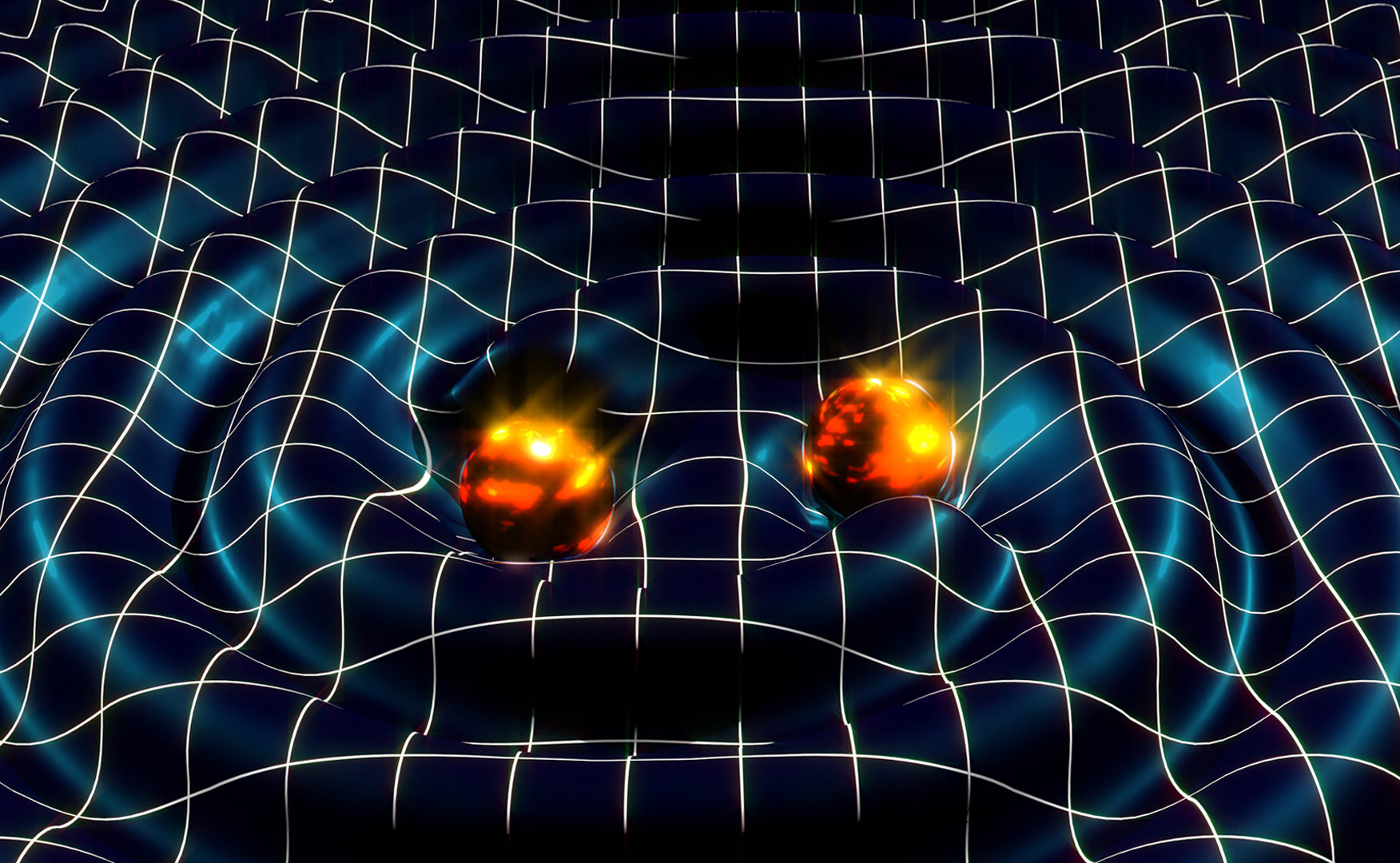
Laura Danly, Andrea Lommen, Kip Thorne, Rainer WeissEinstein's 1916 General Theory of Relativity predicted the existence of gravitational waves—undulations in the very fabric of space and time. It's taken nearly a century, but researchers at the Laser Interferometer Gravitational-wave Observatory are now finally poised to detect them.
-
Back to the Big Bang: Inside the Large Hadron Collider
Frank Wilczek, Jennifer Klay, Marcela Carena, Monica Dunford, John HockenberryVenture deep inside the world’s biggest physics machine, the Large Hadron Collider, which may soon reveal clues about nature’s fundamental laws and even the origin of the universe itself.
-
Black Holes and Holographic Worlds
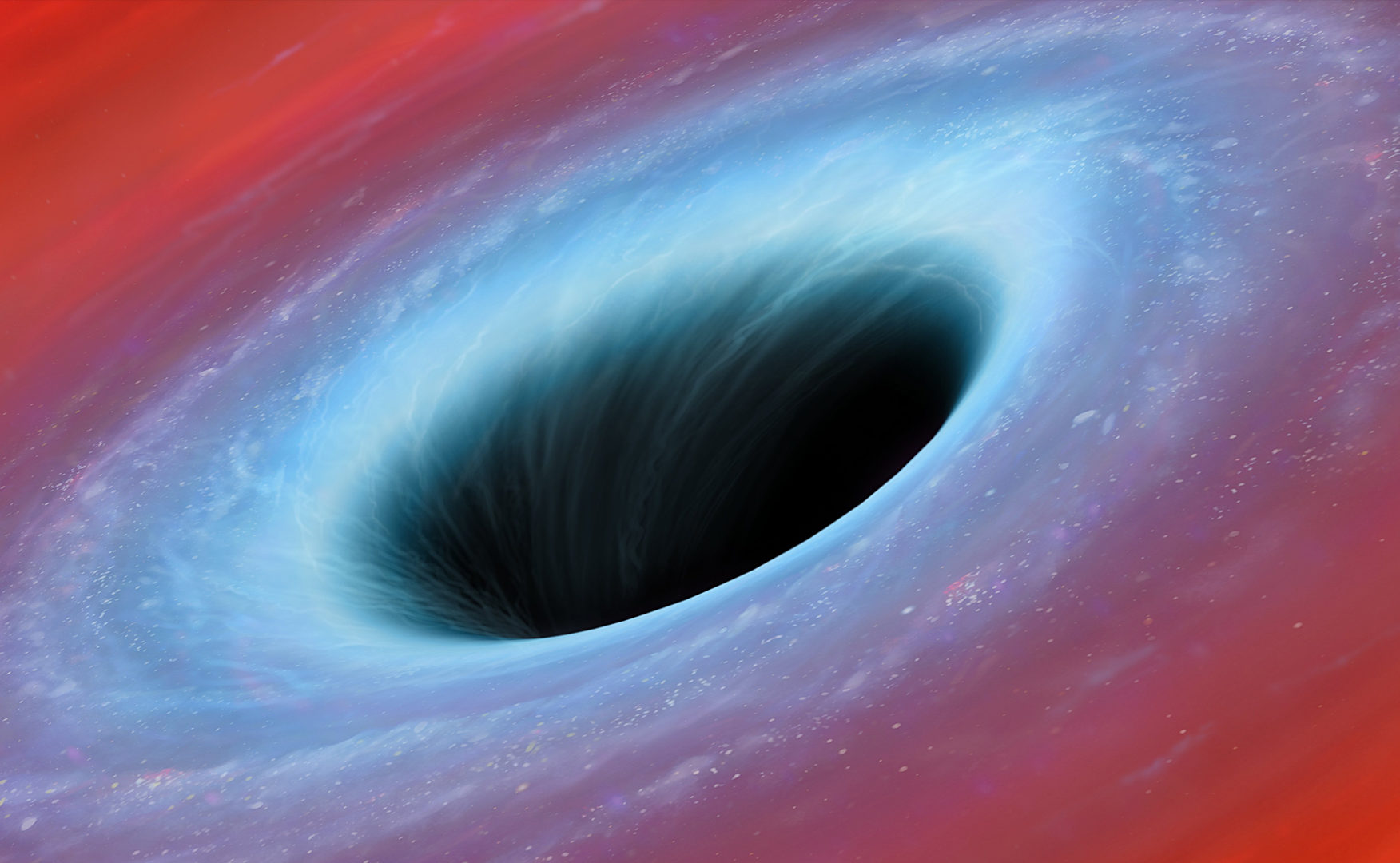
Alan Alda, Raphael Bousso, Robbert Dijkgraaf, Andrew Hamilton, Kip ThorneBlack holes are gravitational behemoths that can twist space and time. Recently, they’ve also pointed researchers to a remarkable proposal—that everything we see may be akin to a hologram.
-
Exoplanets: The Search for New Worlds
Dan Harris, Natalie Batalha, Matt Mountain, Sara SeagerA few decades ago, we knew of no other planets beyond those in our solar system. Today, astronomers have confirmed over 700 planets circling other suns and believe billions more lay undiscovered.
-
Hidden Dimensions: Exploring Hyperspace
Brian Greene, Linda Dalrymple Henderson, Shamit Kachru, Lawrence M. Krauss, John Hockenberry, Escher String QuartetExtra dimensions of space—the idea that we are immersed in hyperspace—may be key to explaining the fundamental nature of the universe.
-
Infinite Worlds: A Journey through Parallel Universes
Brian Greene, Nick Bostrom, Alan Guth, Andrei Linde, Paul D. Miller, Robert KrulwichThe multiverse hypothesis, suggesting that our universe is but one of perhaps infinitely many, speaks to the very nature of reality.
-
On The Shoulders of Giants: A Special Address by Steven Weinberg
Steven WeinbergIn a new annual series, World Science Festival audiences are invited to stand on the shoulders of modern-day giants. In “The Future of Big Science,” Nobel laureate and physicist Steven Weinberg considers the future of fundamental physics.
-
Rebooting the Cosmos: Is the Universe the Ultimate Computer?
John Hockenberry, Edward Fredkin, Seth Lloyd, Fotini Markopoulou-Kalamara, Jürgen SchmidhuberAs computers become progressively faster and more powerful, they’ve gained the impressive capacity to simulate increasingly realistic environments. Might life and the world as we know it be a simulation on a super advanced computer?
-
The 2012 Kavli Prizes
Richard Besser, Angela Belcher, John Holdren, Thomas Jessell, Claire MaxWinners of the prestigious $1 million Kavli Prizes were announced May 31, 2012 live via satellite from the Norwegian Academy of Science and Letters in Oslo.
-
The Search for Life in the Universe
Jill Tarter, Steven Squyres, David Charbonneau, Michael Russell, Sir Paul NurseAre we alone? It’s a question that has obsessed us for centuries, and now we have the technology to do more than wonder.
-
2012 Flame Challenge Prize Announcement
Alan AldaThe 2012 Cool Jobs program began with actor, author, and director Alan Alda hosting The Flame Challenge Prize Announcement.
-
A Thin Sheet of Reality: The Universe as a Hologram
John Hockenberry, Gerard ’t Hooft, Leonard Susskind, Herman Verlinde, Raphael BoussoWhat we touch. What we smell. What we feel. They’re all part of our reality. But what if life as we know it reflects only one side of the full story? Some of the world’s leading physicists think that this may be the case.
-
Afterglow: Dispatches from the Birth of the Universe
Lawrence M. Krauss, John C. Mather, Amber Miller, Lyman Page, David SpergelCosmology is the one field in which researchers can—literally—witness the past. The cosmic background radiation, ancient light streaming toward us since the Big Bang, provides a pristine window onto the birth and evolution of the universe. Join Nobel Laureate John Mather and other leading scientists who are leading the way.
-
Astronomy’s New Messengers
Laura Danly, Andrea Lommen, Kip Thorne, Rainer WeissEinstein's 1916 General Theory of Relativity predicted the existence of gravitational waves—undulations in the very fabric of space and time. It's taken nearly a century, but researchers at the Laser Interferometer Gravitational-wave Observatory are now finally poised to detect them.
-
Back to the Big Bang: Inside the Large Hadron Collider
Frank Wilczek, Jennifer Klay, Marcela Carena, Monica Dunford, John HockenberryVenture deep inside the world’s biggest physics machine, the Large Hadron Collider, which may soon reveal clues about nature’s fundamental laws and even the origin of the universe itself.
-
Black Holes and Holographic Worlds
Alan Alda, Raphael Bousso, Robbert Dijkgraaf, Andrew Hamilton, Kip ThorneBlack holes are gravitational behemoths that can twist space and time. Recently, they’ve also pointed researchers to a remarkable proposal—that everything we see may be akin to a hologram.
-
Good Vibrations: The Science of Sound
Jamshed Bharucha, Jacob Kirkegaard, Christopher Shera, Mark Whittle, Polygraph Lounge, John SchaeferJourney through the nature of sound. How we perceive it, how it acts upon us, and how it profoundly affects our well-being.
-
Hidden Dimensions: Exploring Hyperspace
Brian Greene, Linda Dalrymple Henderson, Shamit Kachru, Lawrence M. Krauss, John Hockenberry, Escher String QuartetExtra dimensions of space—the idea that we are immersed in hyperspace—may be key to explaining the fundamental nature of the universe.
-
Infinite Worlds: A Journey through Parallel Universes
Brian Greene, Nick Bostrom, Alan Guth, Andrei Linde, Paul D. Miller, Robert KrulwichThe multiverse hypothesis, suggesting that our universe is but one of perhaps infinitely many, speaks to the very nature of reality.
-
Mind and Machine: The Future of Thinking
John Donoghue, Gary Small, Luciano Floridi, Rosalind Picard, John HockenberryAs thinking, remembering, and innovating become increasingly interwoven with technological advances, what are we capable of?
-
Mysteries of the Mathematical Universe
Keith Devlin, Jonathan Borwein, Robert Krulwich, Marcus du Sautoy, Simon SinghMathematical mysteries have challenged humanity’s most powerful thinkers and inspired passionate, lifelong obsessions in search of answers.
-
Quantum Biology and the Hidden Nature of Nature
John Hockenberry, Paul Davies, Seth Lloyd, Thorsten RitzCan the spooky world of quantum physics explain bird navigation, photosynthesis and even our delicate sense of smell?
-
Rebooting the Cosmos: Is the Universe the Ultimate Computer?
John Hockenberry, Edward Fredkin, Seth Lloyd, Fotini Markopoulou-Kalamara, Jürgen SchmidhuberAs computers become progressively faster and more powerful, they’ve gained the impressive capacity to simulate increasingly realistic environments. Might life and the world as we know it be a simulation on a super advanced computer?
-
The Illusion of Certainty: Risk, Probability, and Chance
Marcus du Sautoy, Gerd Gigerenzer, Leonard Mlodinow, Josh Tenenbaum, Amir AczelStuff happens. The weather forecast says it’s sunny, but you just got drenched. You got a flu shot—but you’re sick in bed with the flu. Your best friend from Boston met your other best friend from San Francisco. Coincidentally. What are the odds?
-
The Limits of Understanding
Mario Livio, Gregory Chaitin, Rebecca Newberger Goldstein, Marvin Minsky, Sir Paul NurseThis statement is false. Think about it, and it makes your head hurt. If it’s true, it’s false. If it’s false, it’s true. Leading thinkers untangle Kurt Gödel's landmark paradox and explore the wider implications of the early 19th-century logician's revolutionary findings.
-
The Mathemagician
Arthur BenjaminDiscover the man who's faster than a calculator.
-
The Unbearable Lightness of Memory
Dan Harris, Daniel L. Schacter, Elizabeth Phelps, Lynn Nadel, Todd SacktorIt’s the thought of your childhood home. It’s that comforting aroma you can still smell ten years later. It’s the way you define yourself. It’s your memory.
-
!@#$% Traffic: From Insects to Interstates
Robert Krulwich, Iain Couzin, Anna Nagurney, Mitchell JoachimCan marching ants, schooling fish, and herding wildebeests teach us something about the morning commute? Robert Krulwich guides this unique melding of mathematics, physics, and behavioral science as Mitchell Joachim, Anna Nagurney and Iain Couzin examine the creative and sometimes counterintuitive solutions to one of the modern world’s most annoying problems.
-
All Creatures Great and Smart
Brian Hare, Vanessa Woods, Jeremy Niven, Patrick R. Hof, Klaus Zuberbühler, Jad AbumradJoin a panel of leading scientists whose research is challenging long-held assumptions about the differences between “animal” and “human”—and learn about pin-sized brains that can count, categorize, and hold a grudge against those who’ve tried to swat them.
-
Astronaut Diary: Life in Space
Tracy Caldwell Dyson, Sandra Magnus, Leland Melvin, Dava Newman, Miles O’BrienHear firsthand from the world’s most intrepid explorers about what it’s like to soar upward and leave our home, planet Earth, behind.
-
Cancer’s Last Stand? The Genome Solution
Richard Besser, Eric Lander, Mary-Claire King, Olufunmilayo Olopade, Siddhartha MukherjeeThe Cancer Genome Atlas (modeled after the Human Genome Project) promises a new and powerful approach in this age-old battle.
-
Exoplanets: The Search for New Worlds
Dan Harris, Natalie Batalha, Matt Mountain, Sara SeagerA few decades ago, we knew of no other planets beyond those in our solar system. Today, astronomers have confirmed over 700 planets circling other suns and believe billions more lay undiscovered.
-
Food 2.0: Feeding a Hungry World
Pamela Ronald, Louise O. Fresco, Bill Blakemore, Monty P. JonesCan we bridge the ideological divide over genetically modified foods that separates scientists and environmentalists? What role does eating and farming locally play in the next green revolution?
-
How We Bounce Back: The New Science of Human Resilience
Bill Blakemore, George Bonanno, Dennis Charney, Fran Norris, Matthieu RicardWhy do some people bounce back from traumatic events while others do not? Leading thinkers from around the world explore these and other questions about the science of human resiliency.
-
Internet Everywhere: The Future of History’s Most Disruptive Technology
John Donvan, Vinton Cerf, Neil Gershenfeld, Elizabeth Stark, Alex WrightPioneers of the digital revolution examine the Internet’s brief but explosive history and reveal nascent projects that will shortly reinvent how we interact with technology—and each other.
-
Keeping Secrets: Cryptography in a Connected World
Josh Zepps, Brian Snow, Tal Rabin, Orr Dunkelman, Simon SinghSince the earliest days of communication, clever minds have devised methods for enciphering messages to shield them from prying eyes.
-
Man-Made Minds: Living with Thinking Machines
Faith Salie, David Ferrucci, Eric Horvitz, Hod Lipson, Rodney BrooksWho, or what, are these thinking machines? We were joined by IBM’s WATSON, the computer Jeopardy! champion, along with leading roboticists and computer scientists, to explore the thinking machines of today and the possibilities to come in the not-too-distant future.
-
On The Shoulders of Giants: A Special Address by Steven Weinberg
Steven WeinbergIn a new annual series, World Science Festival audiences are invited to stand on the shoulders of modern-day giants. In “The Future of Big Science,” Nobel laureate and physicist Steven Weinberg considers the future of fundamental physics.
-
Scents and Sensibilities: The Invisible Language of Smell
Leslie Vosshall, Sissel Tolaas, Consuelo De Moraes, Avery Gilbert, Juju ChangOver hundreds of thousands of years, our ancestors learned to encode specific scents with information that saved their lives. Many species still depend heavily on smell for their daily survival.
-
The 2012 Kavli Prizes
Richard Besser, Angela Belcher, John Holdren, Thomas Jessell, Claire MaxWinners of the prestigious $1 million Kavli Prizes were announced May 31, 2012 live via satellite from the Norwegian Academy of Science and Letters in Oslo.
-
The Mind after Midnight: Where Do You Go When You Go to Sleep?
Carl Zimmer, Matthew Wilson, Niels Rattenborg, Carlos H. SchenckEvery organism on Earth relies on sleep for its survival, yet science is still wrestling with a fundamental question: Why does sleep exist?
-
The Origins of Orientation: Sexuality in 2011
Jim Pfaus, Marc Breedlove, Meredith Chivers, Paul Vasey, Andrew SolomonWhat is the relationship between sexuality and gender? How do biology and culture interact to produce it? Why does homosexuality defy evolution’s dictate for reproduction?
-
The Search for Life in the Universe
Jill Tarter, Steven Squyres, David Charbonneau, Michael Russell, Sir Paul NurseAre we alone? It’s a question that has obsessed us for centuries, and now we have the technology to do more than wonder.
-
Why We Prevailed: Evolution and the Battle for Dominance
John Hockenberry, Alison Brooks, Ed Green, Chris Stringer, Edward O. WilsonJoin evolutionary biologists, geneticists and anthropologists as they share profound insights about the origin of man.
-
Why We Tell Stories: The Science of Narrative
Jay Allison, Paul Bloom, Jeffrey Eugenides, Jonathan Gottschall, Joyce Carol OatesStories have existed in many forms throughout history and across almost all human cultures. But is storytelling essential to survival?
-
Cancer’s Last Stand? The Genome Solution
Richard Besser, Eric Lander, Mary-Claire King, Olufunmilayo Olopade, Siddhartha MukherjeeThe Cancer Genome Atlas (modeled after the Human Genome Project) promises a new and powerful approach in this age-old battle.
-
Cool Jobs, Cool Kids, Cool Contest
Baba Brinkman, Cynthia Bir, Jarod Miller, Wendy Suzuki, Adam WilsonThe Festival’s ever-popular Cool Jobs is back with a jaw-dropping show that brings you face-to-face with amazing scientists with amazing jobs.
-
Food 2.0: Feeding a Hungry World
Pamela Ronald, Louise O. Fresco, Bill Blakemore, Monty P. JonesCan we bridge the ideological divide over genetically modified foods that separates scientists and environmentalists? What role does eating and farming locally play in the next green revolution?
-
Beautiful Minds: The Enigma of Genius
Philip Glass, Julie Taymor, Rex Jung, R. Douglas Fields, Dean Keith Simonton, Brian GreeneImmanuel Kant, who coined the term genius in the 1700s, defined it as the rare capacity to independently understand concepts that would normally have to be taught by another person. Since then, the spectrum of abilities that we call genius has widened, but pivotal questions remain: What exactly is genius?
-
Consciousness: Explored and Explained
Charlie Kaufman, Giulio Tononi, Alan AldaConsciousness is a terrible curse. Or is it? Filmmaker Charlie Kaufman, neuroscientist Giulio Tononi, and moderator Alan Alda explore and explain the art, science, and mystery of consciousness.
-
Eye Candy: Science, Sight, Art
Jules Feiffer, Buzz Hays, Patrick Cavanagh, Margaret S. Livingstone, Christopher W. Tyler, Lawrence WeschlerThere may be universal biological principles that drive art’s appeal, and its capacity to engage our brains and our interest.
-
Good Vibrations: The Science of Sound
Jamshed Bharucha, Jacob Kirkegaard, Christopher Shera, Mark Whittle, Polygraph Lounge, John SchaeferJourney through the nature of sound. How we perceive it, how it acts upon us, and how it profoundly affects our well-being.
-
Notes & Neurons: In Search of the Common Chorus
Jamshed Bharucha, Bobby McFerrin, Daniel Levitin, Lawrence Parsons, John SchaeferIs our response to music hard-wired or culturally determined? Is the reaction to rhythm and melody universal or influenced by environment?
-
Strangers in the Mirror
Oliver Sacks, Chuck Close, Alexandra Lynch, Robert KrulwichWhat’s it like to face a faceless world? Acclaimed neurologist Oliver Sacks and portraitist Chuck Close share their experiences of living with a curious condition known as “face blindness.”
-
Why We Tell Stories: The Science of Narrative
Jay Allison, Paul Bloom, Jeffrey Eugenides, Jonathan Gottschall, Joyce Carol OatesStories have existed in many forms throughout history and across almost all human cultures. But is storytelling essential to survival?